Patient 9


Upper Eyelid Surgery
Upper eyelid surgery is indicated when an excessive amount of skin covers the free eyelid and maximal medical treatments such as Botox and/or hyaluronic acid support on the temples have been surpassed. This excess skin, known as blepharochalasis, often leads to visual fatigue and headaches caused by the hypercontraction of the frontal muscles that lift the eyebrows and upper eyelids. In advanced cases, it can even result in a reduction of the visual field.
This surgery, also called upper blepharoplasty, involves removing the excess skin through a small incision mostly hidden in the supratarsal fold. From an anatomical perspective, the eyelid’s role is to protect the eyeball by closing. Thus, the pretarsal eyelid, which is the mobile part near the lashes, is preserved.
The procedure is performed under light general anesthesia, without intubation, allowing the use of a state-of-the-art electronic scalpel that both cuts and cauterizes at the same time. As a result, bruising is rare.


Surgical Blepharoplasty
Visual fatigue is a common reason for consultation in facial surgery. The appearance of bags under the eyes and the lack of support for the lower eyelid can lead to dry eyes. Excess skin on the upper eyelid can also result in a reduced field of vision and headaches by the end of the day.
Surgical blepharoplasty is the gold standard treatment for bags under the eyes and excess skin on the upper eyelid. It is an outpatient procedure with excellent results and minimal discomfort for the patient.
The result shown here is observed one year after the procedure.


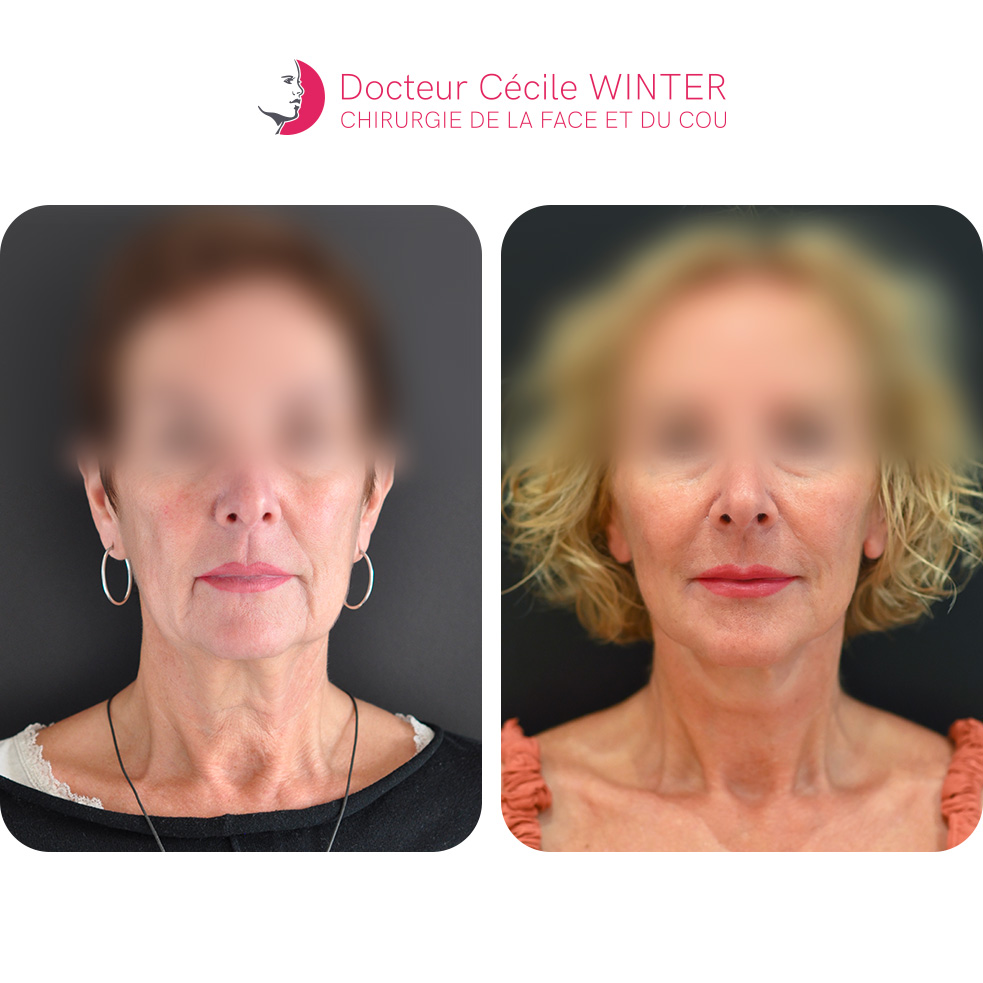
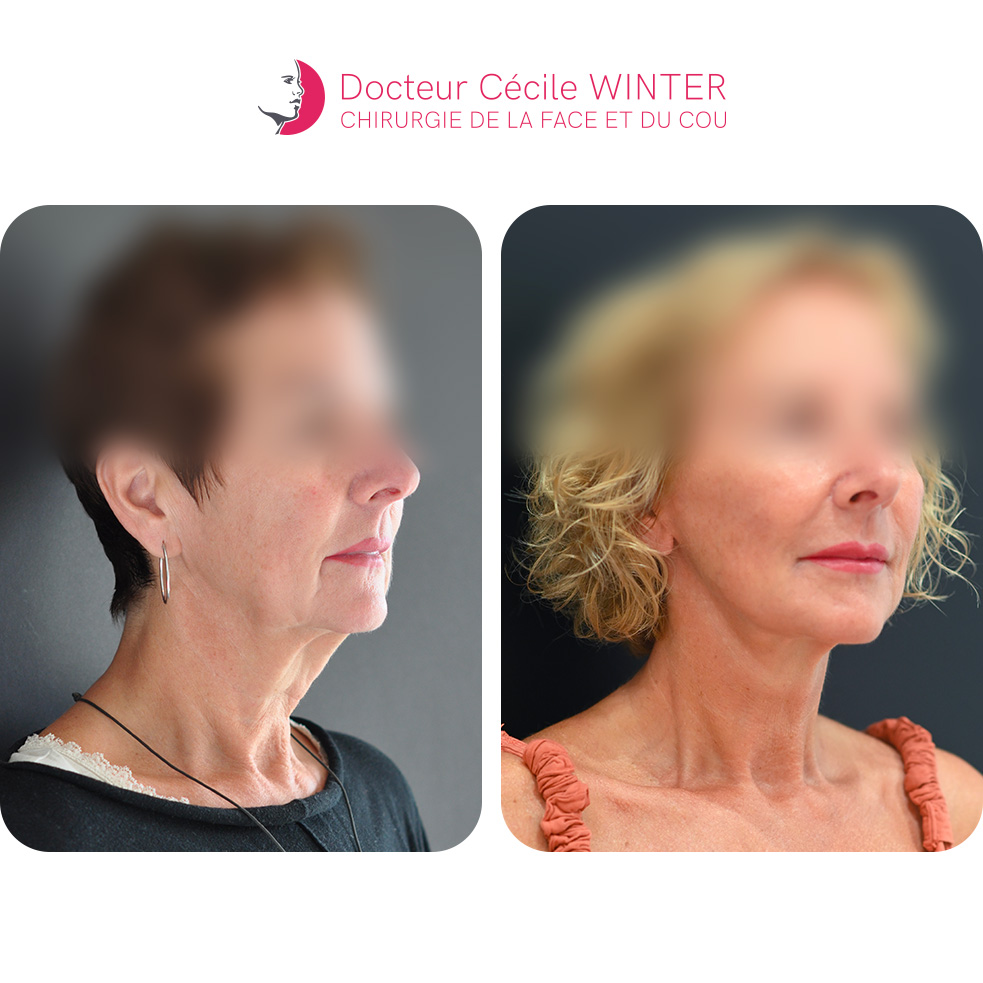
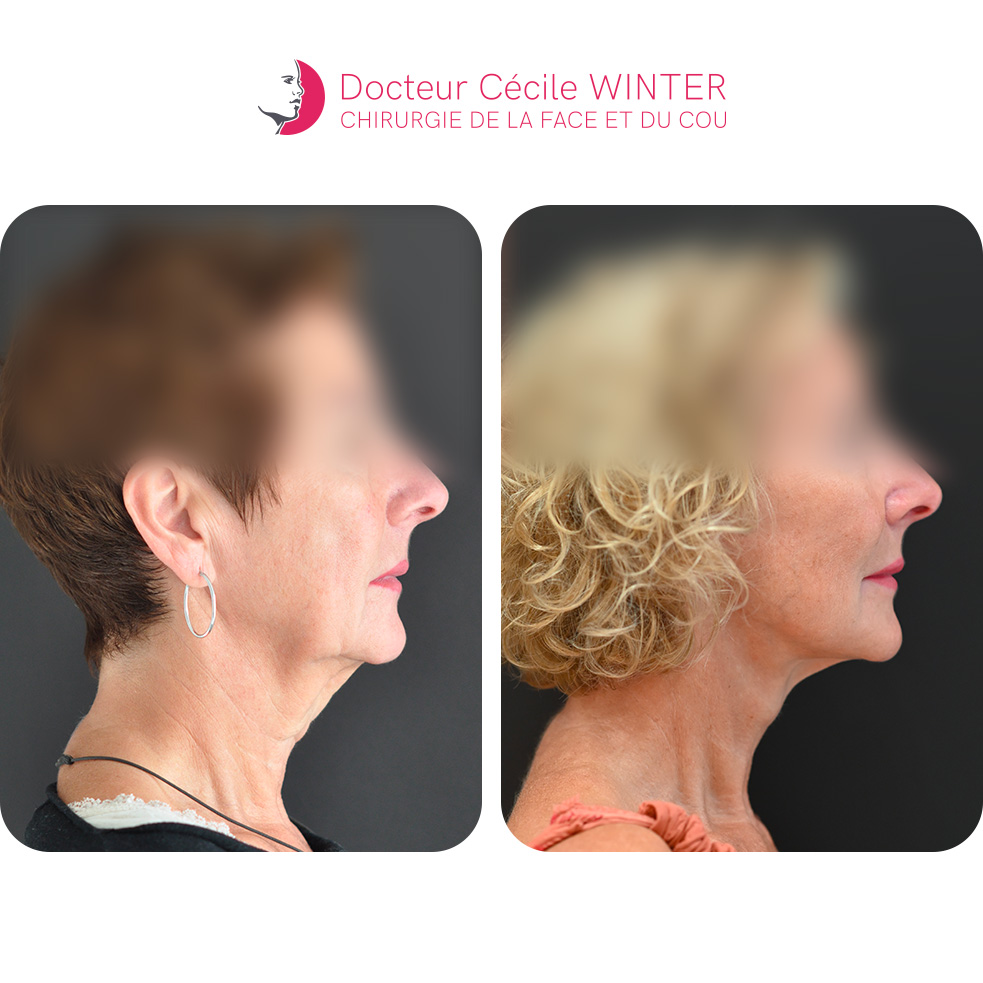
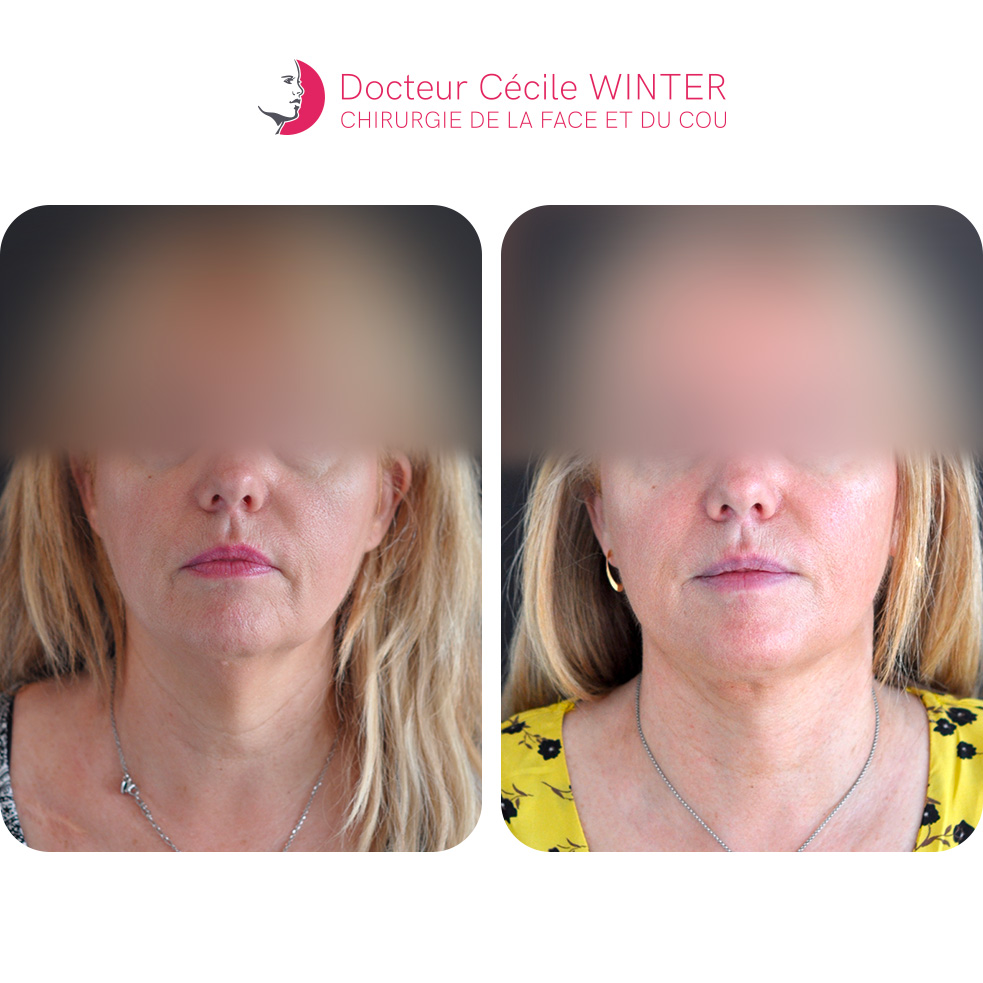
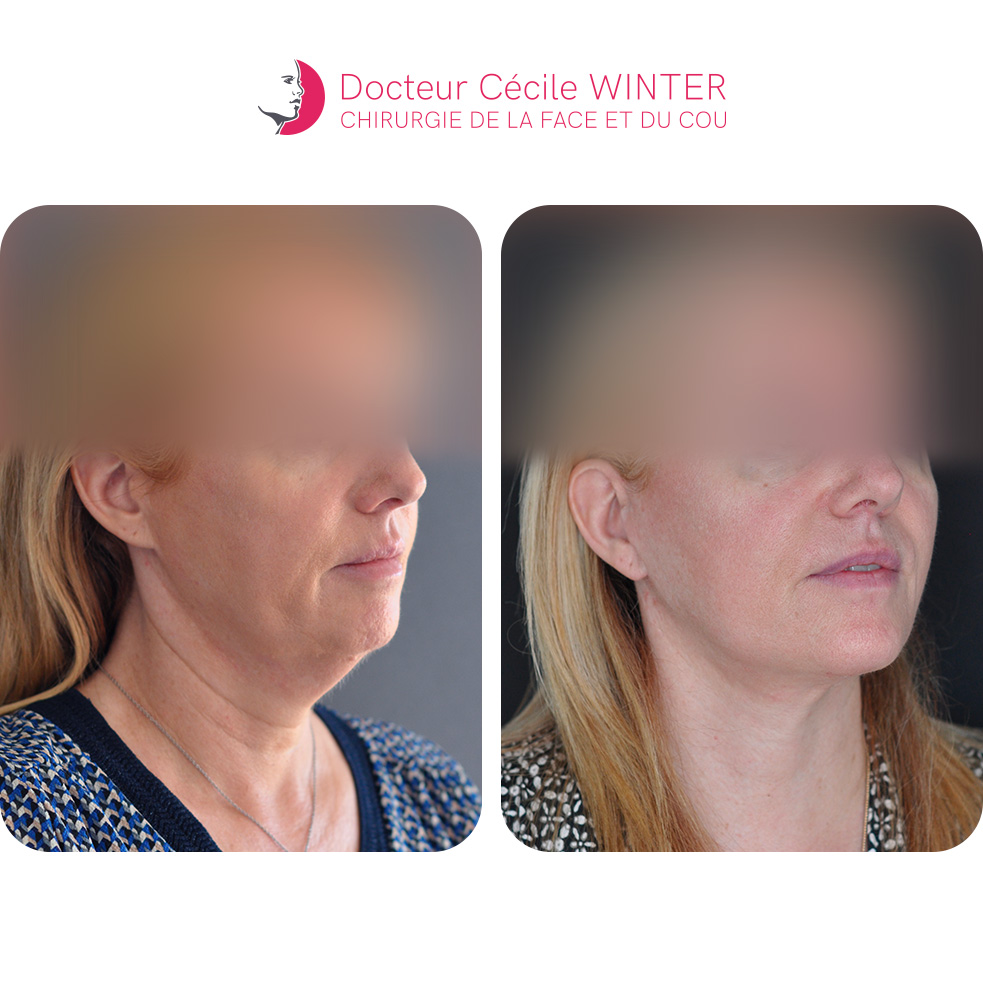
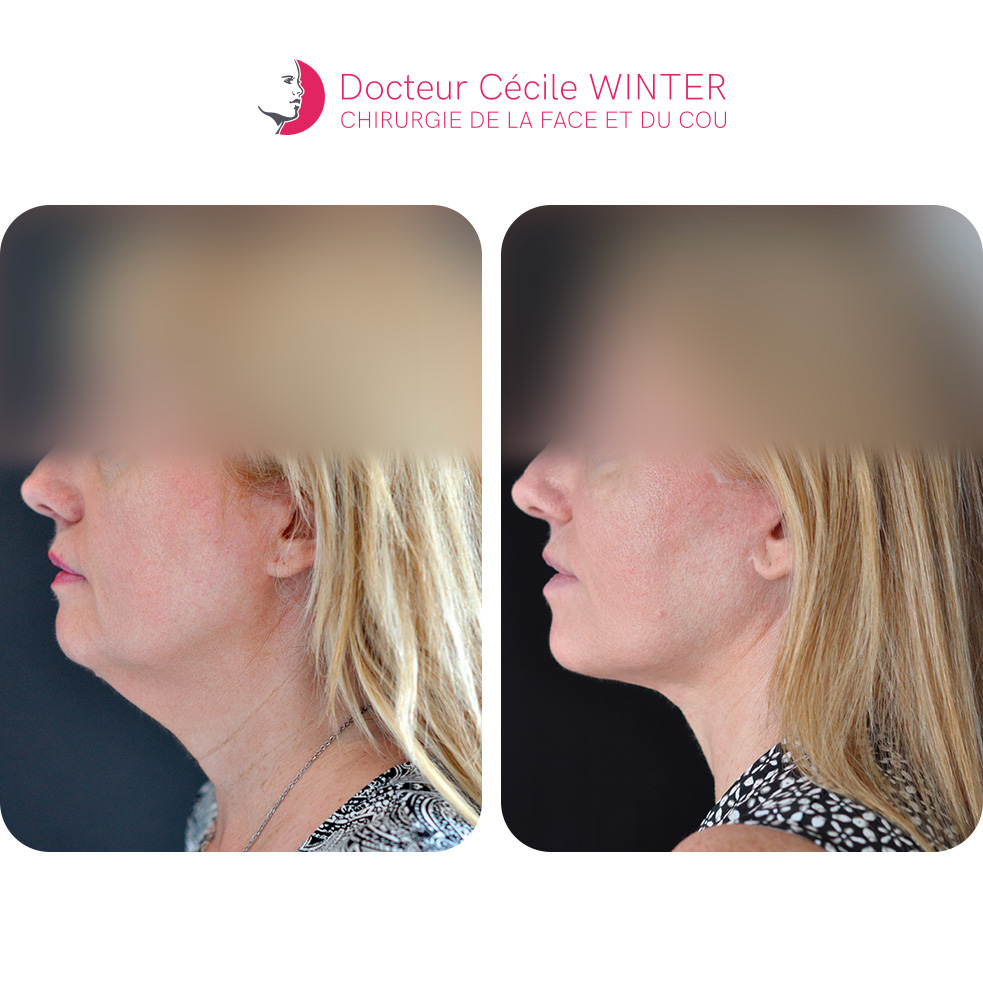
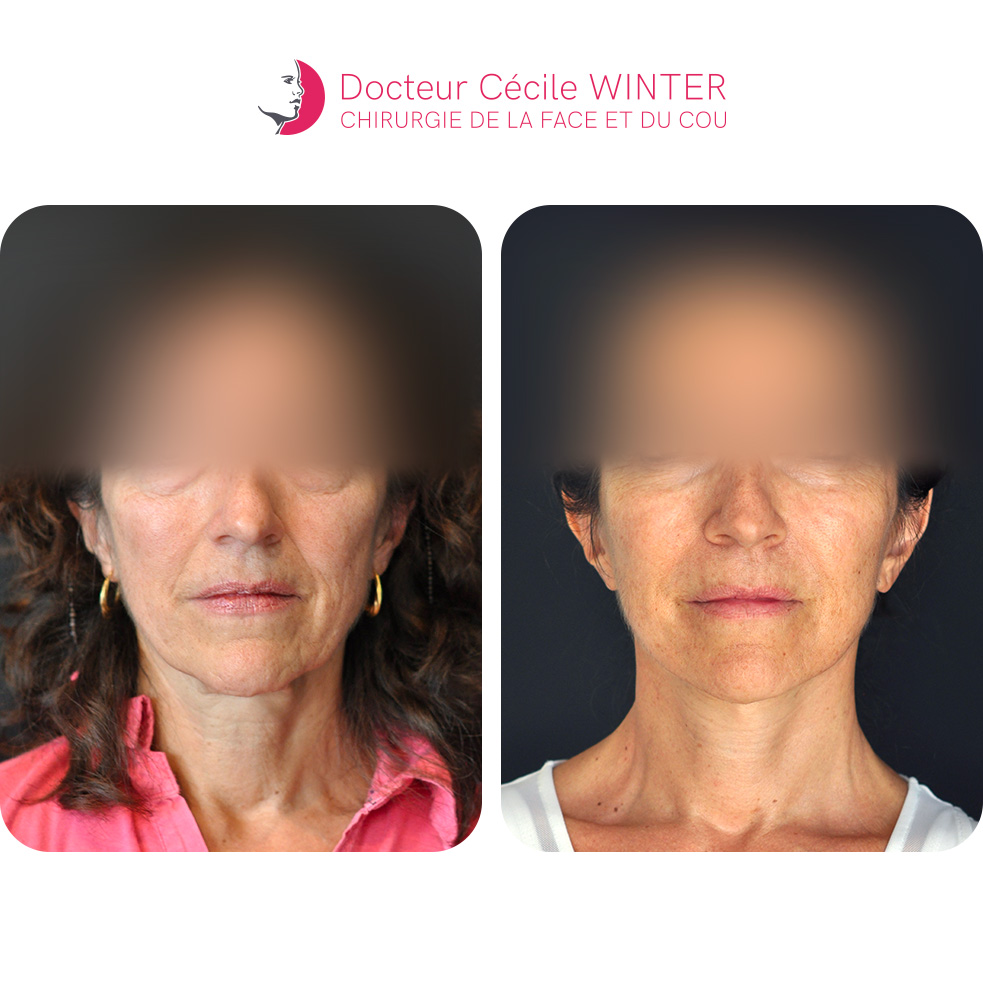
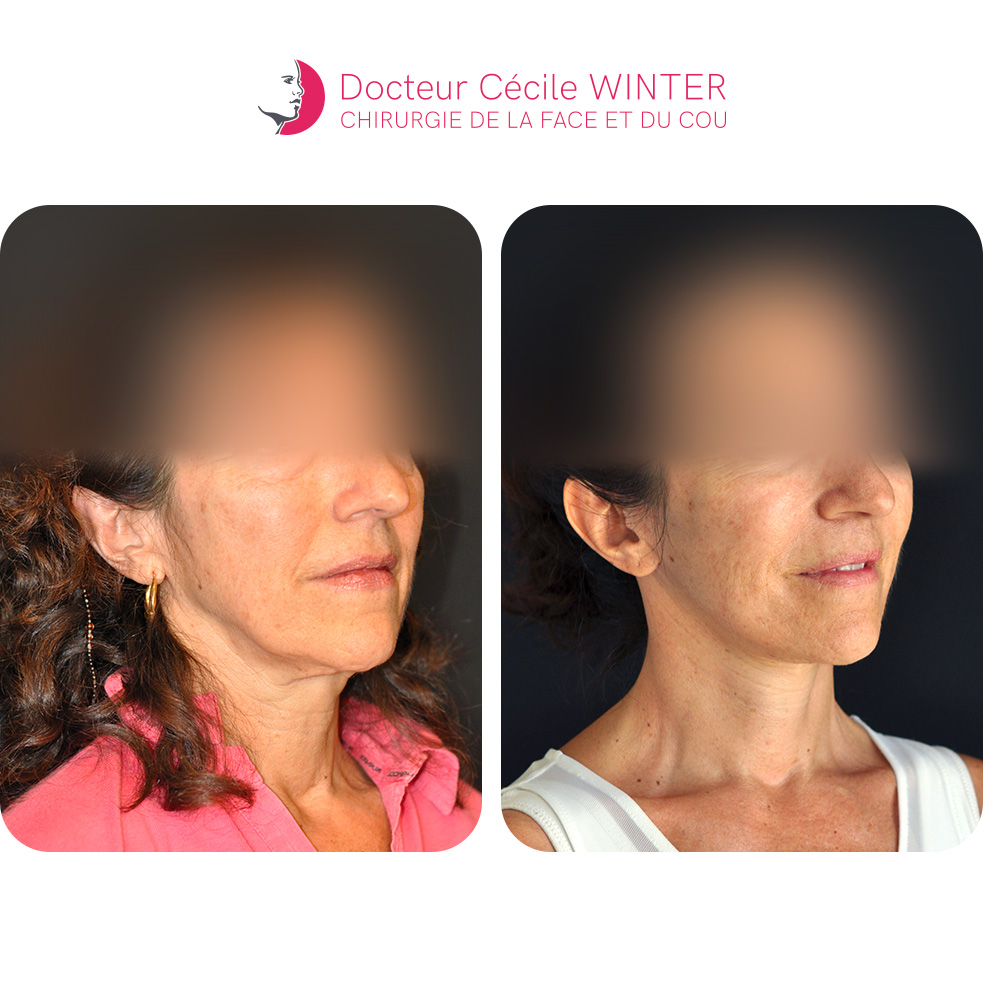
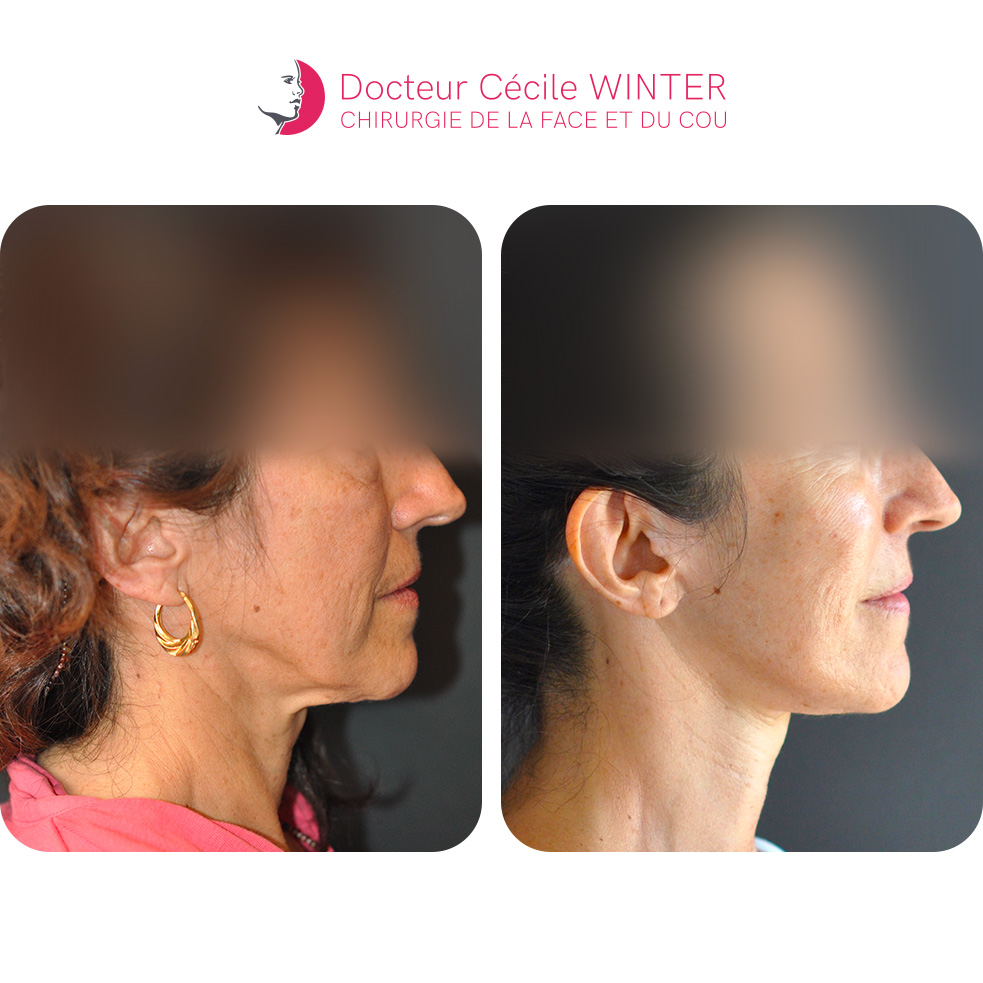
Conservative Anatomical Lift and Lower Blepharoplasty
Here we observe a patient experiencing visual fatigue and dryness due to a lack of tarsal support, leading to an orbital fat herniation. This fat loss is also visible in the nasolabial folds and marionette lines, with inadequate support of the lower lip. The oval and neck show sagging and shifting of tissues downward and forward, affecting the outer corners of the mouth and sides of the chin. This tired appearance can significantly impact self-esteem.
A conservative anatomical lift (Deep Plane Lift) and a scarless lower blepharoplasty were performed 6 years ago to address these issues. Annual maintenance with small injections has been carried out since.