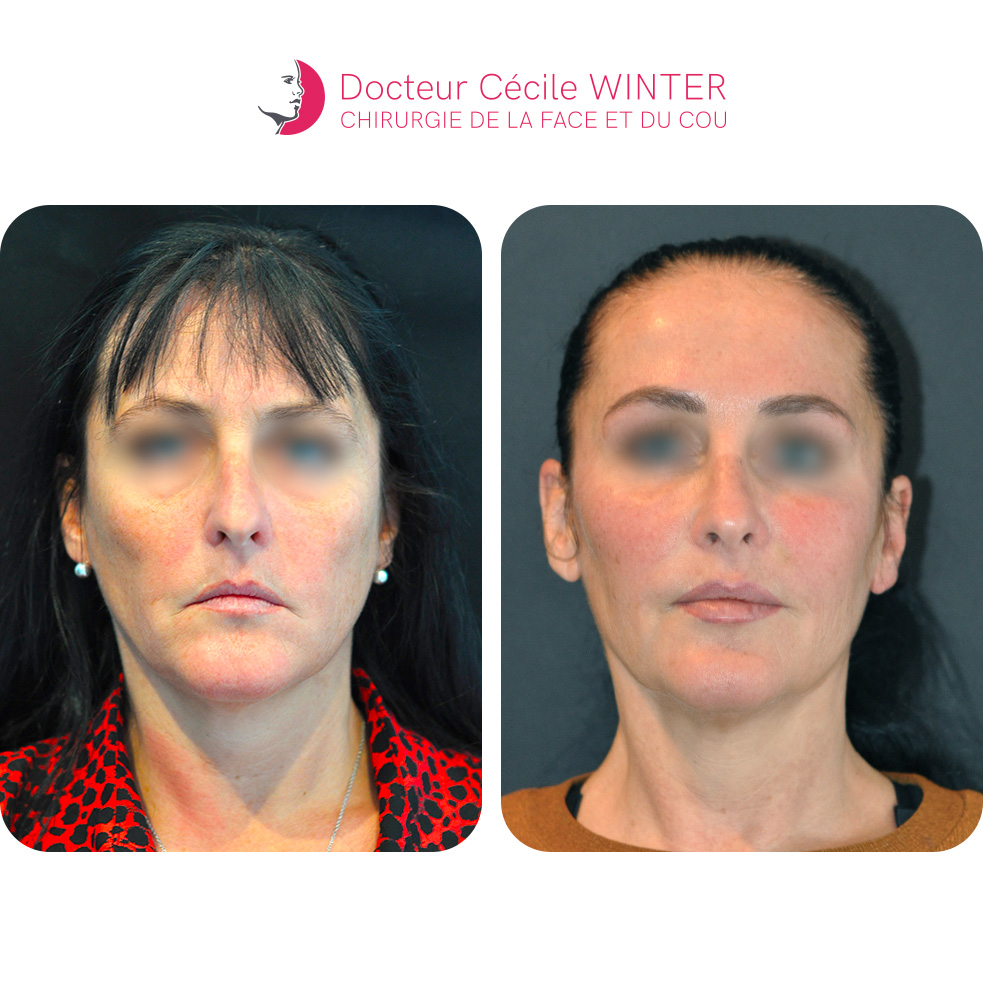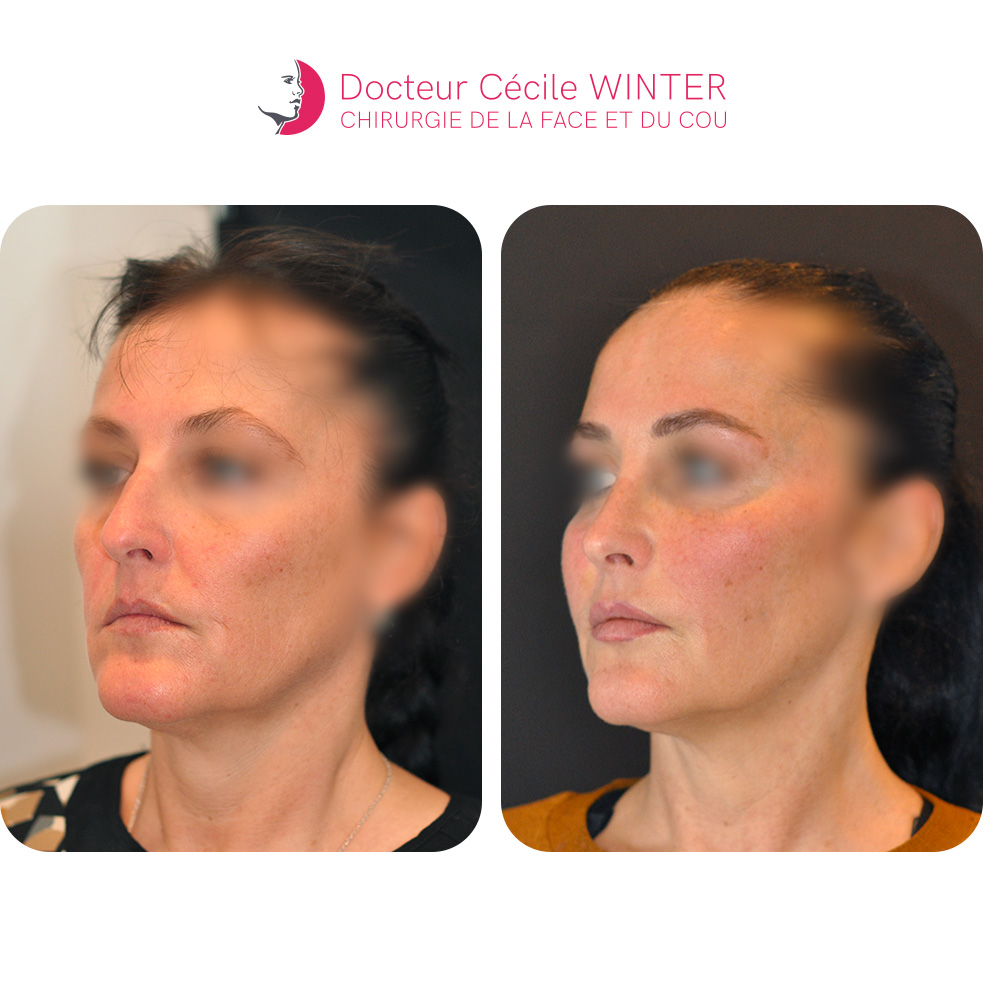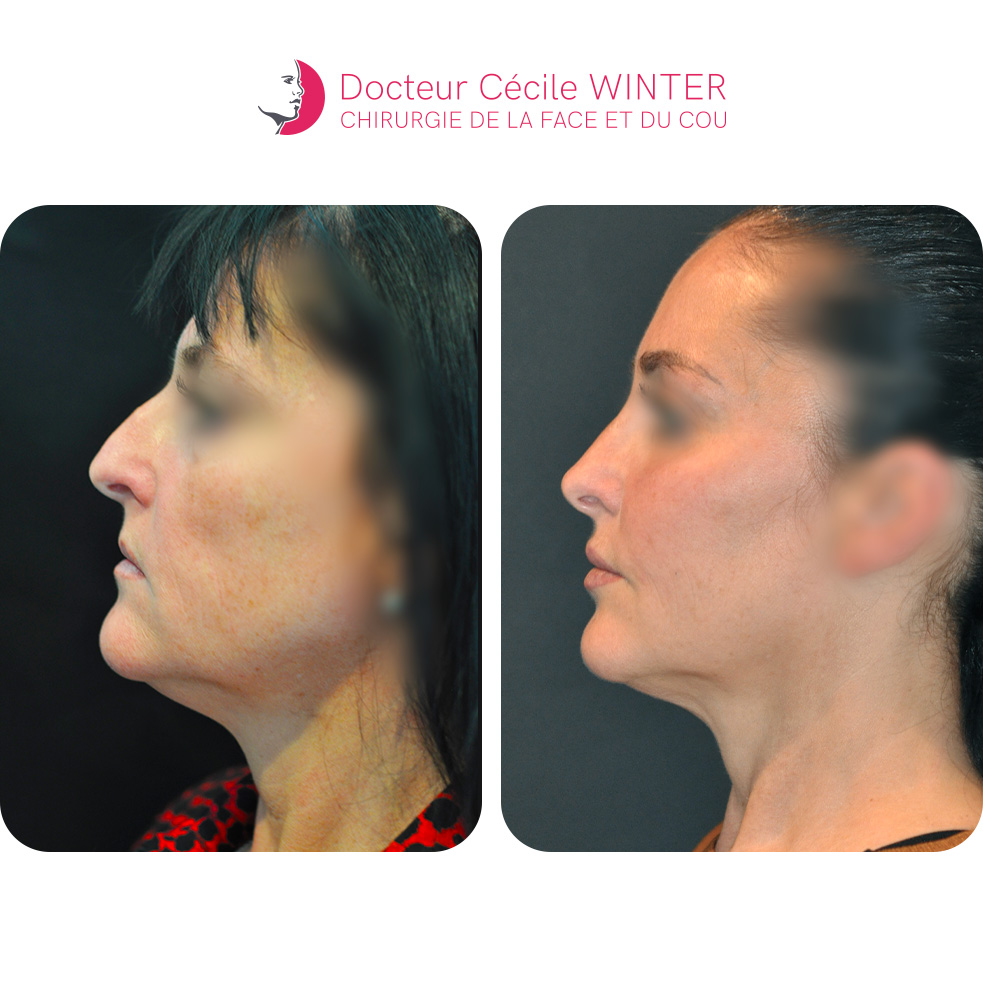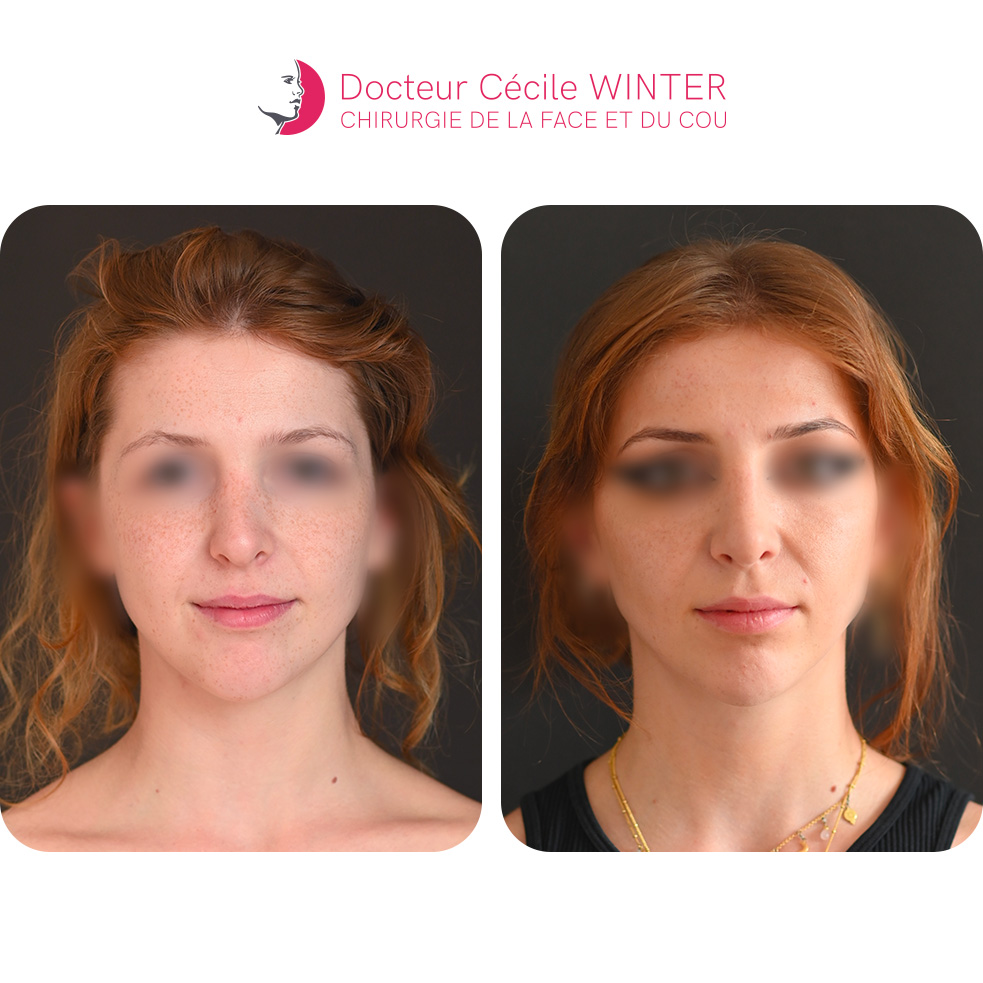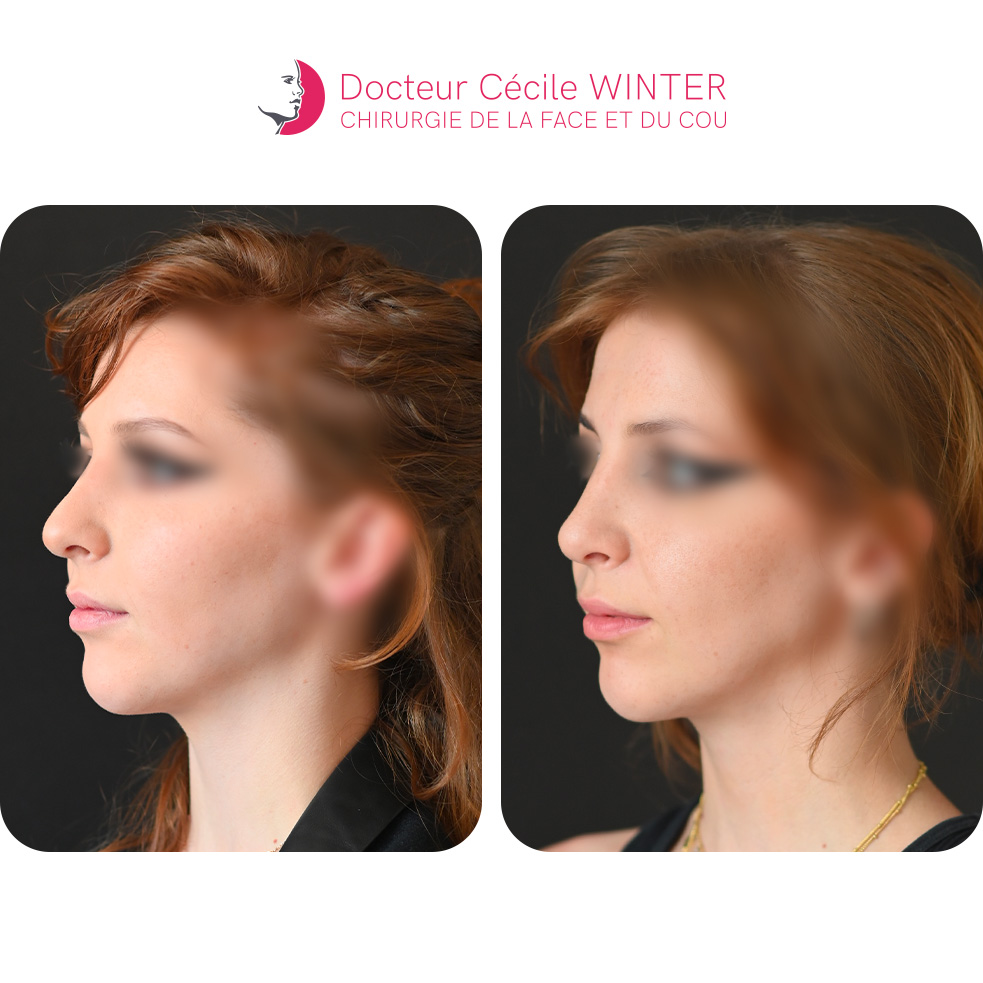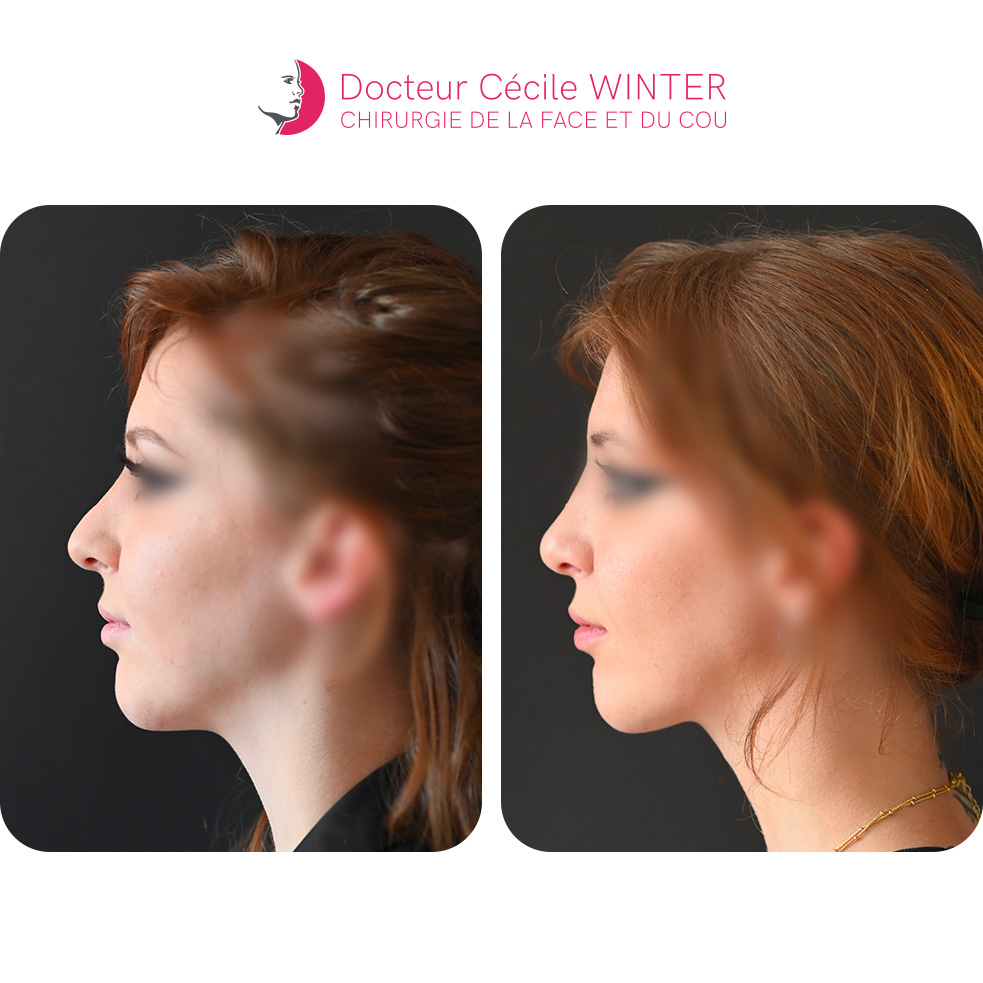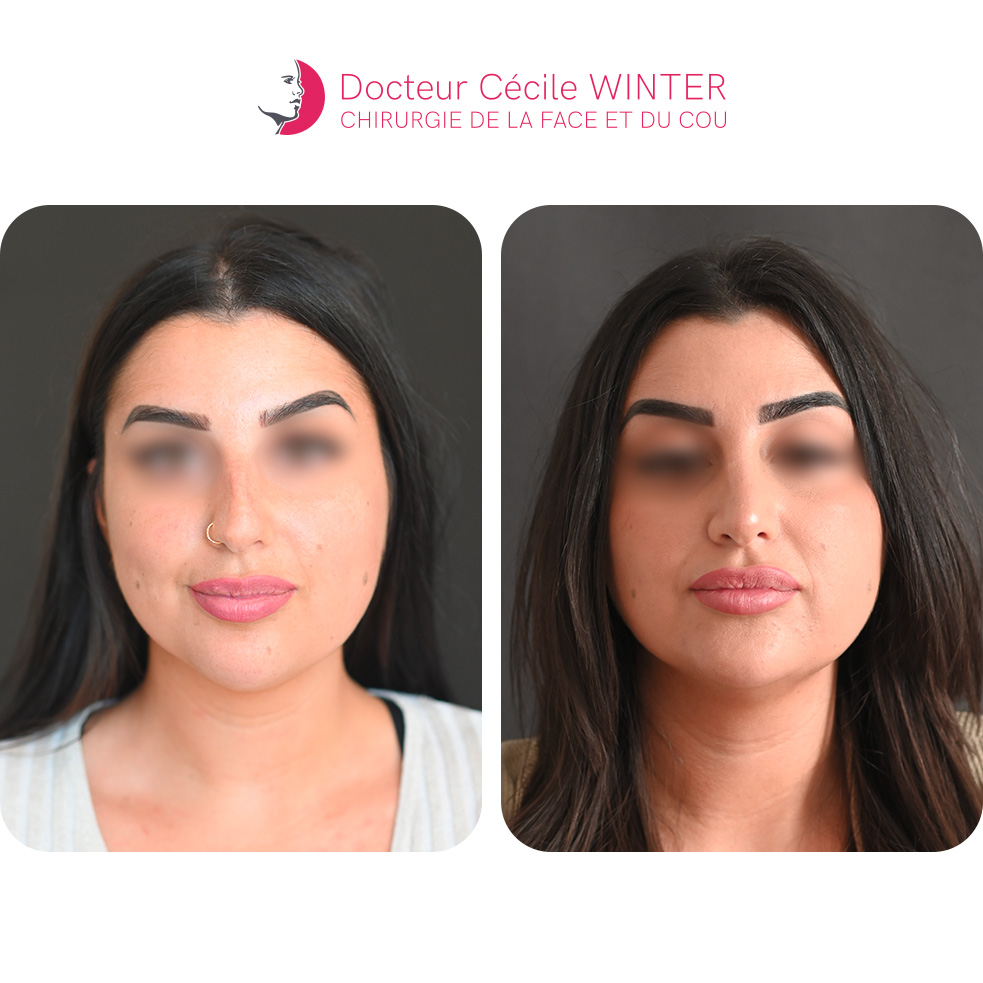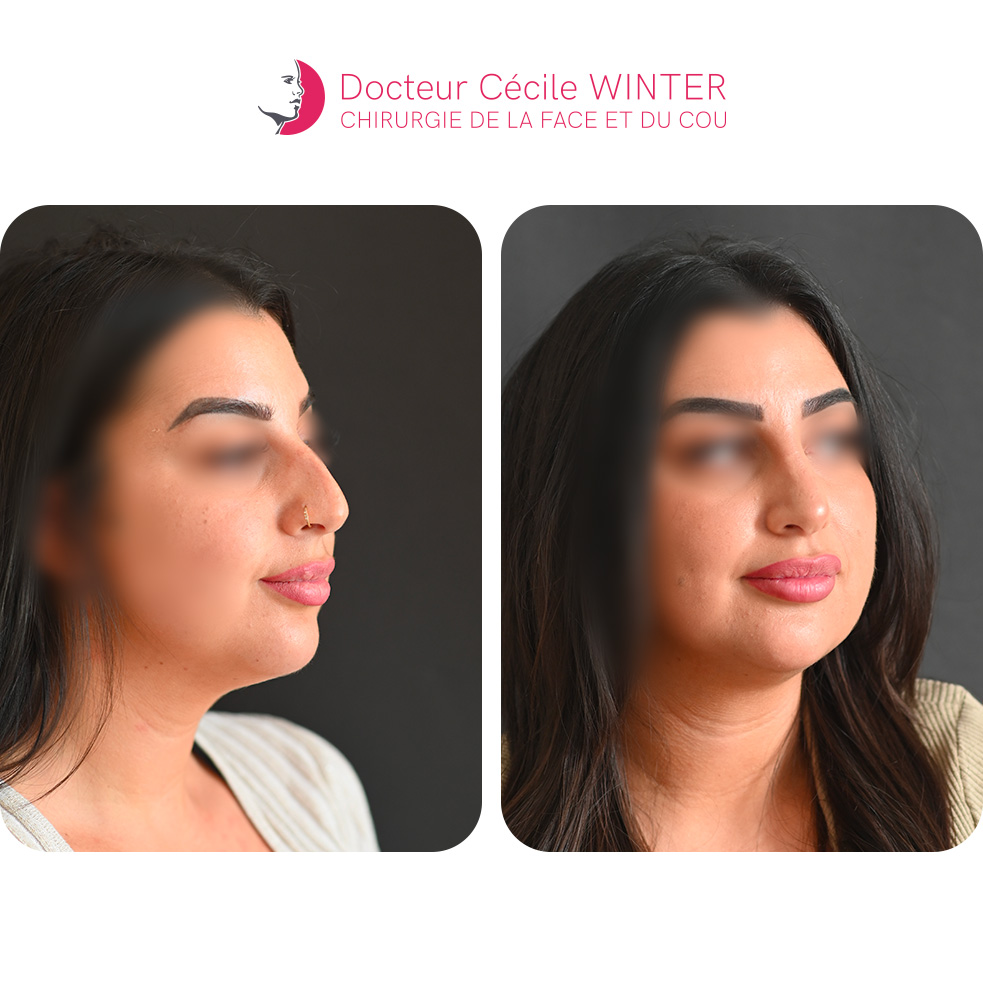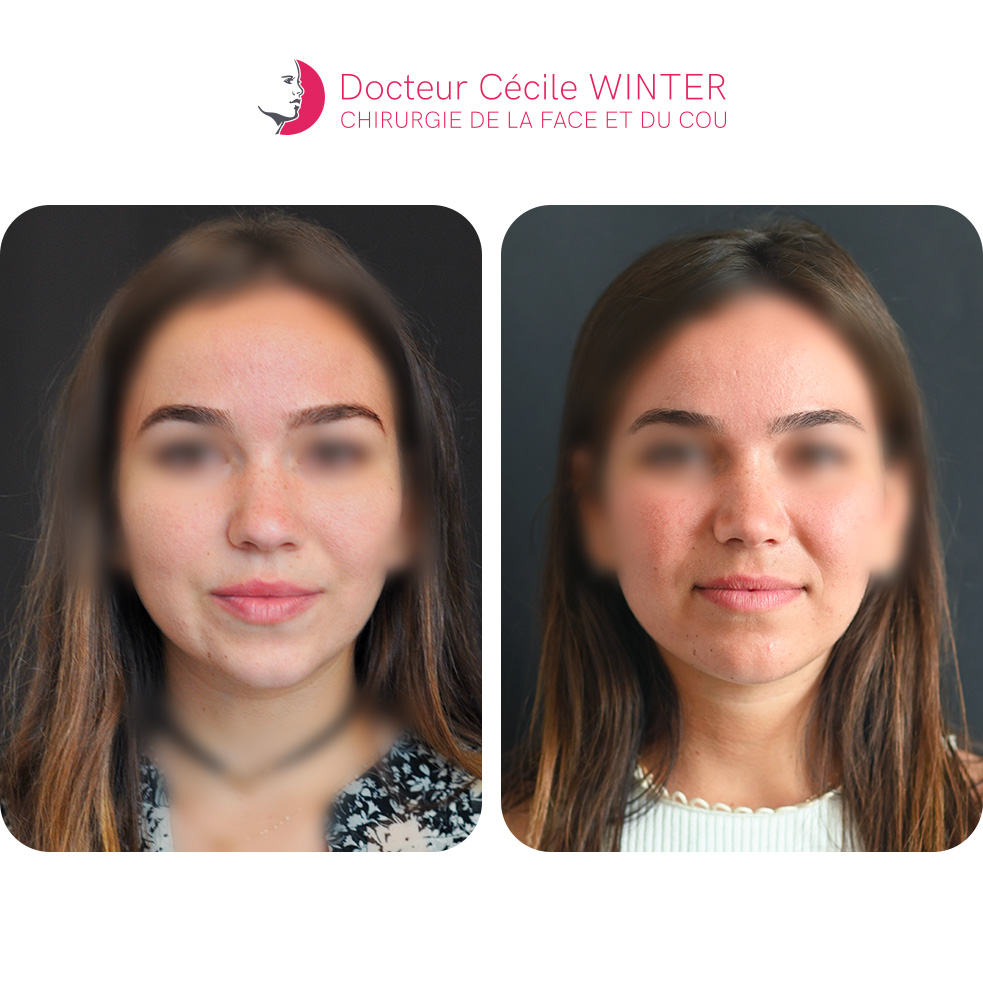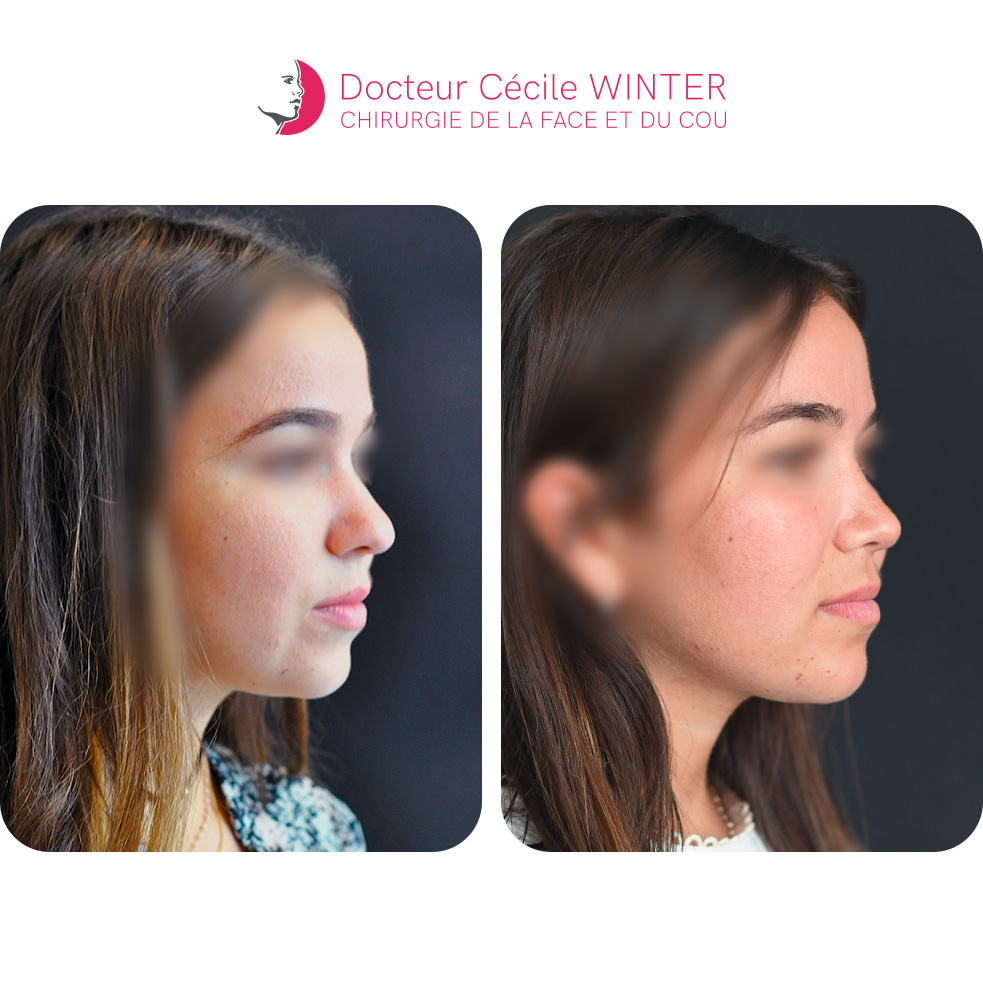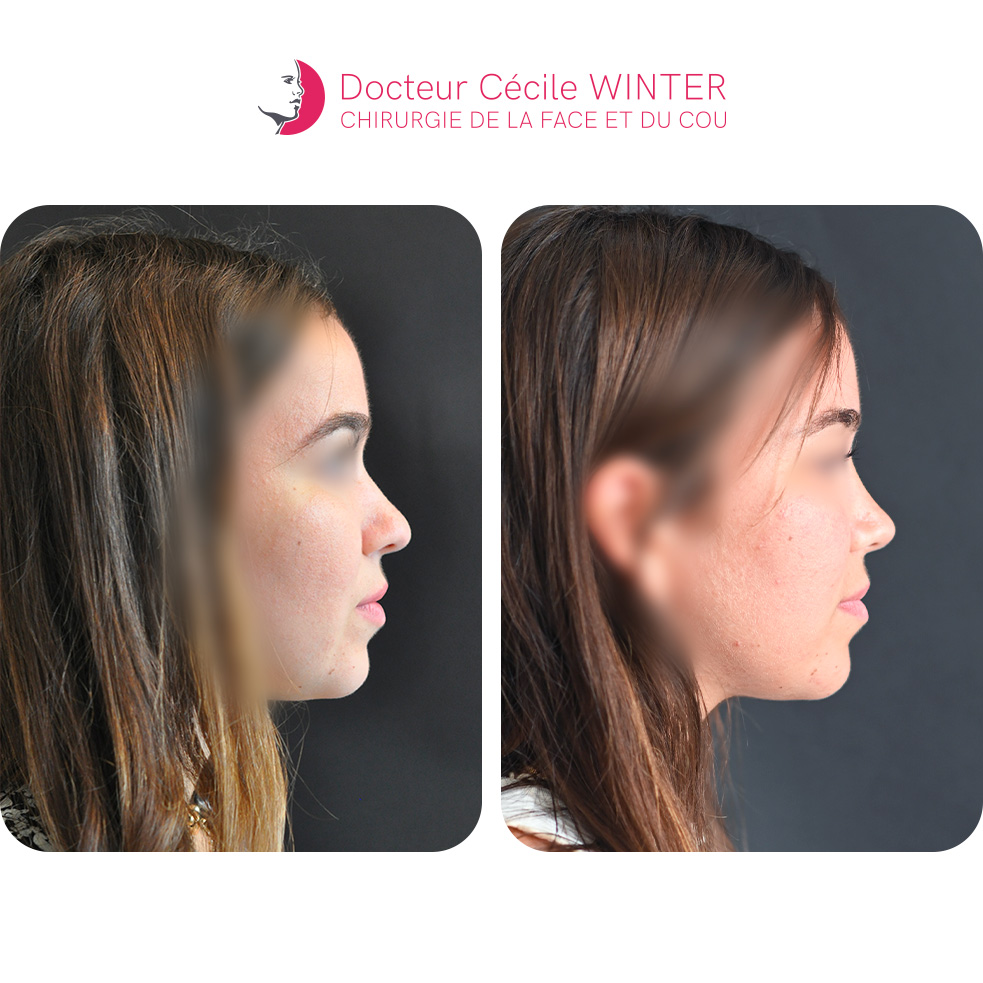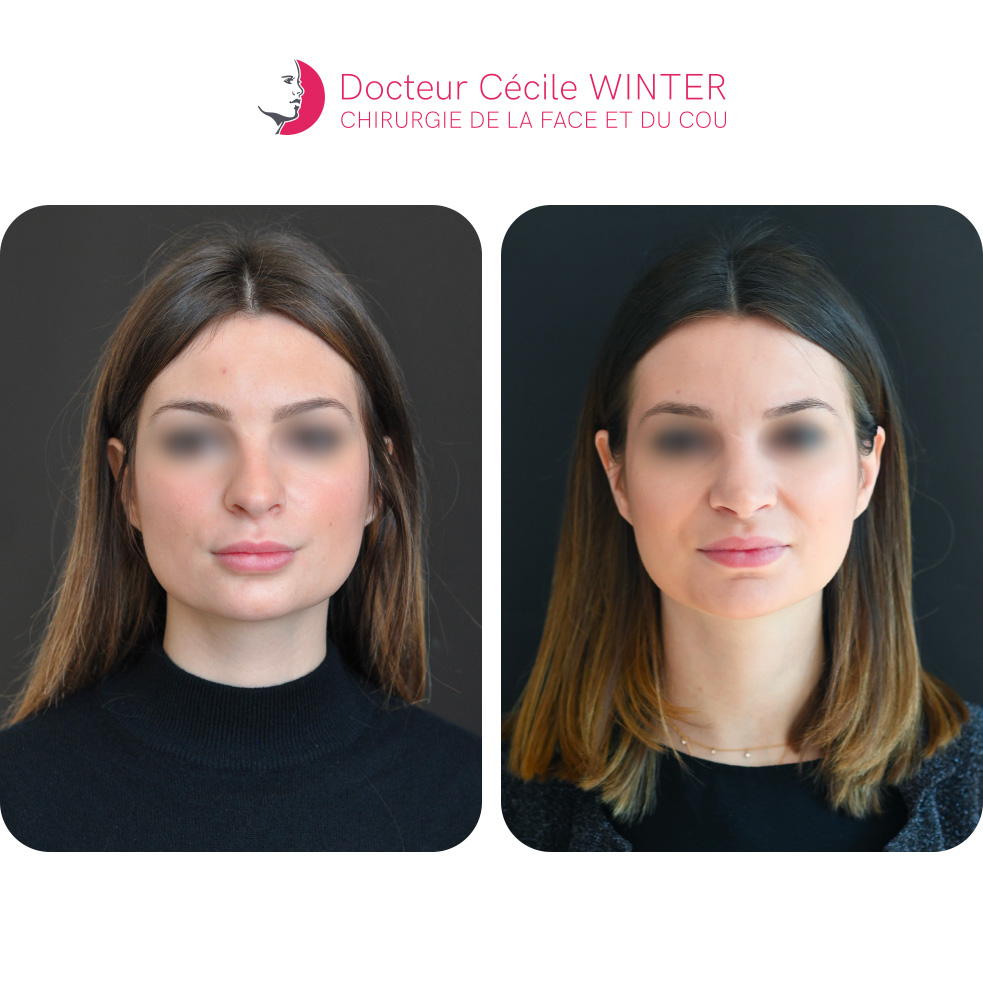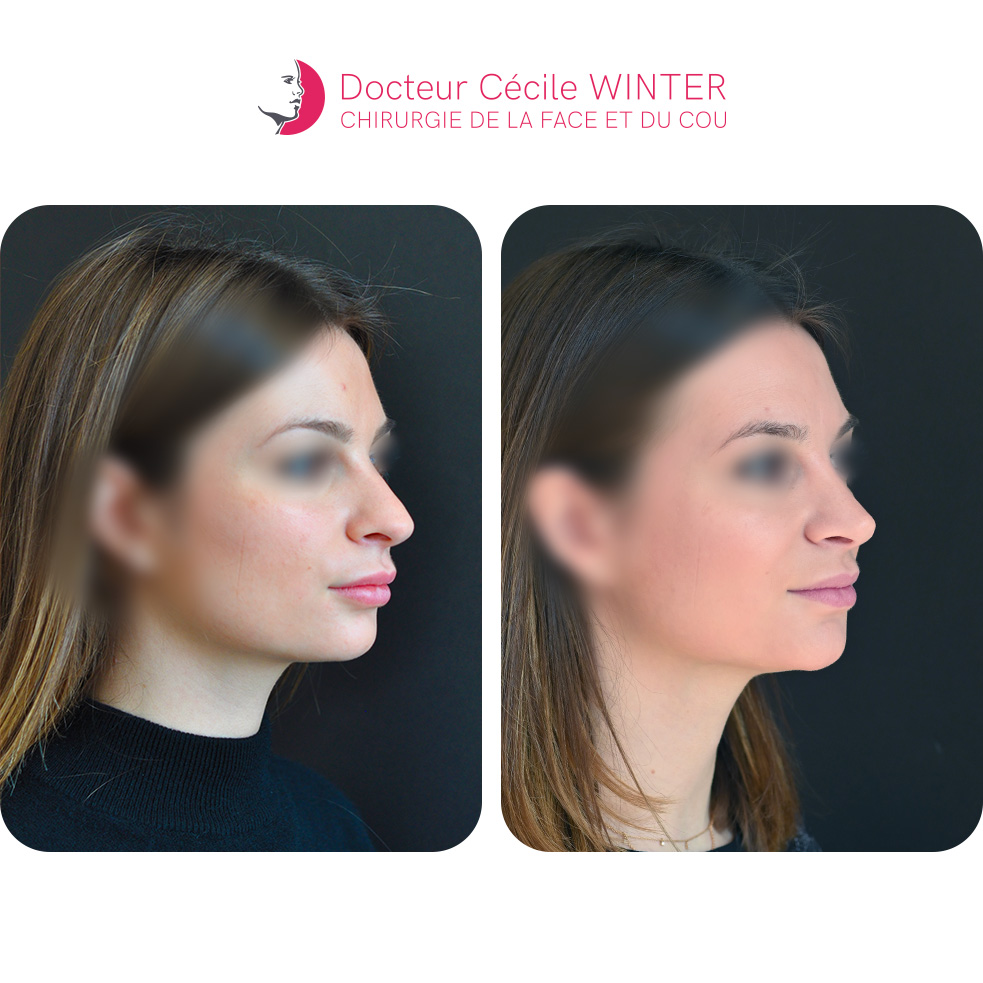
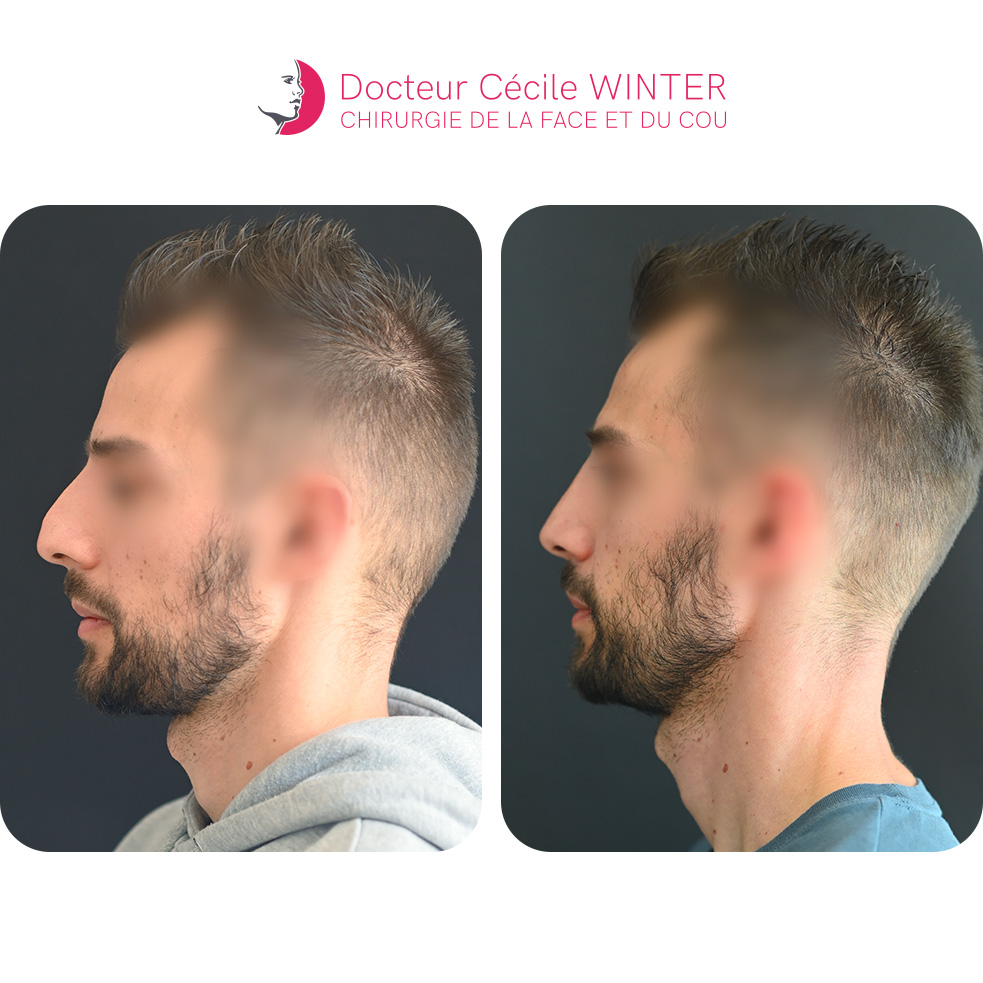
Patient 15

Conservative Anatomical Rhinoplasty

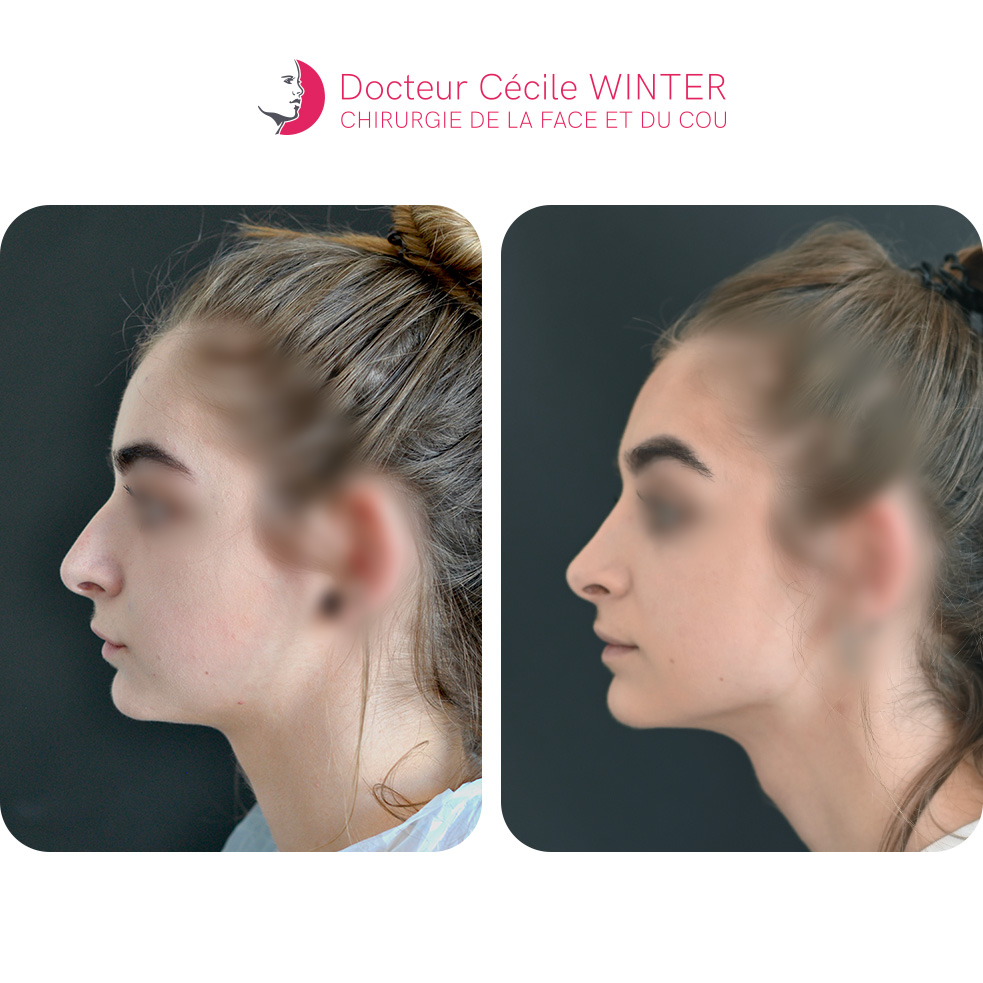
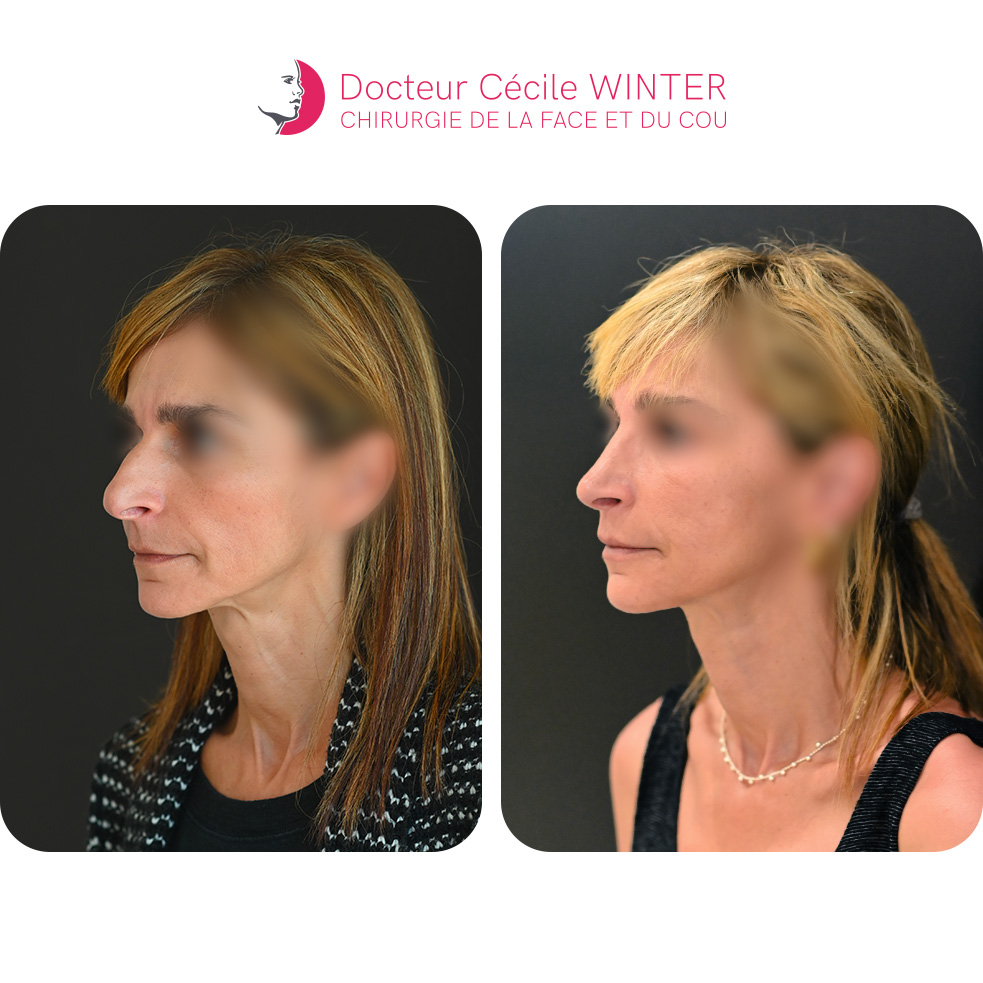
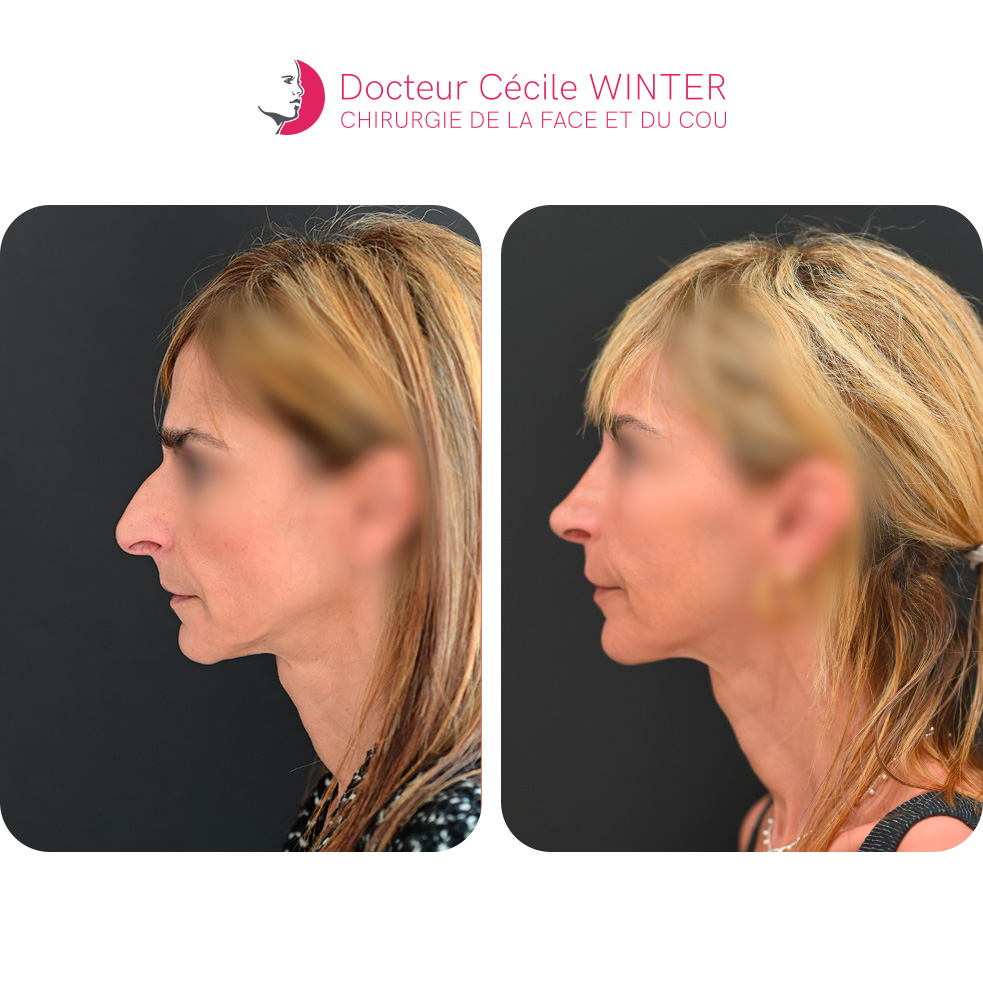
Patient presented with a tense nose and a very high septum, causing both internal and external valve syndrome. The tip was suspended and drooping, and the angle between the nose and mouth was quite open. The nasal root height, nasal base height, and actual tip projection were appropriate.

The conservative anatomical rhinoplasty aimed to improve breathing by reducing septal height while maintaining its length and adapting it to the actual tip height. The tip cartilages were also adjusted, as their vertical orientation caused breathing difficulties. They were horizontalized, which better defined the supratip and nostril opening.
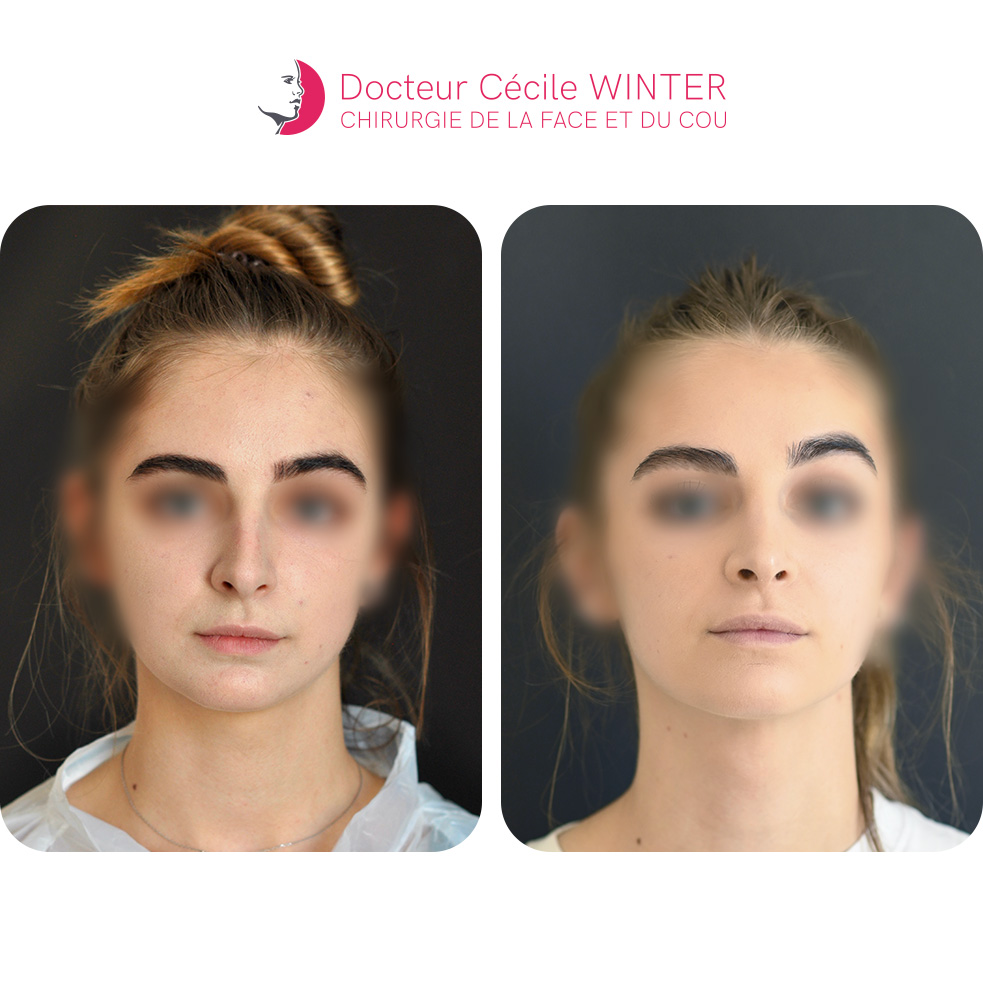
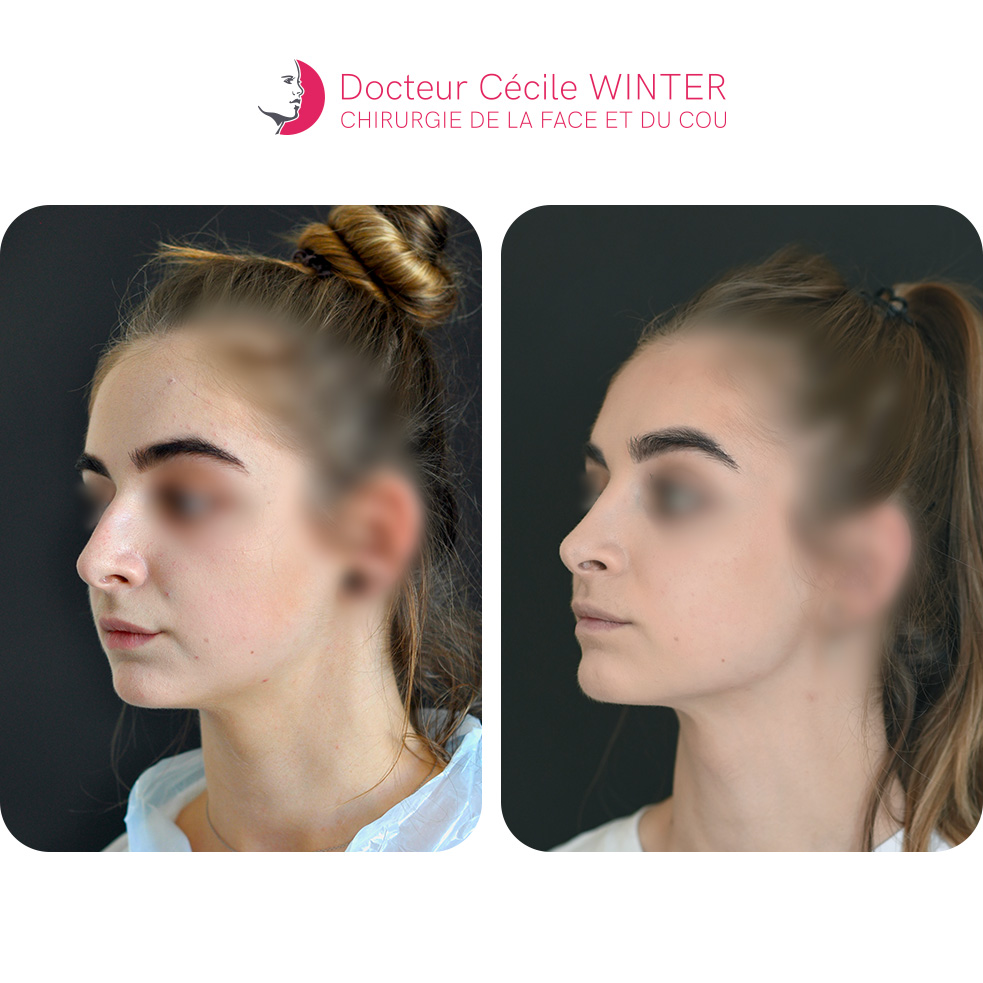
 

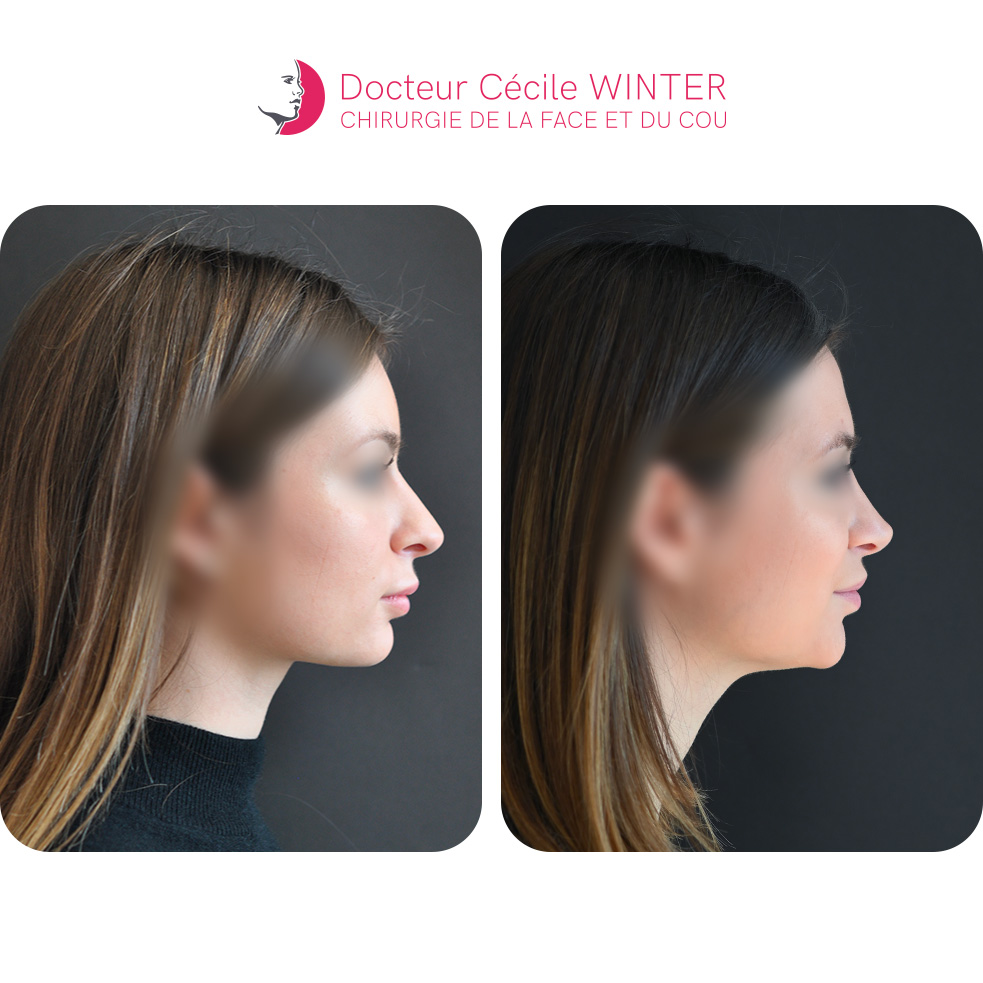
Patient 14

Conservative Anatomical Rhinoplasty

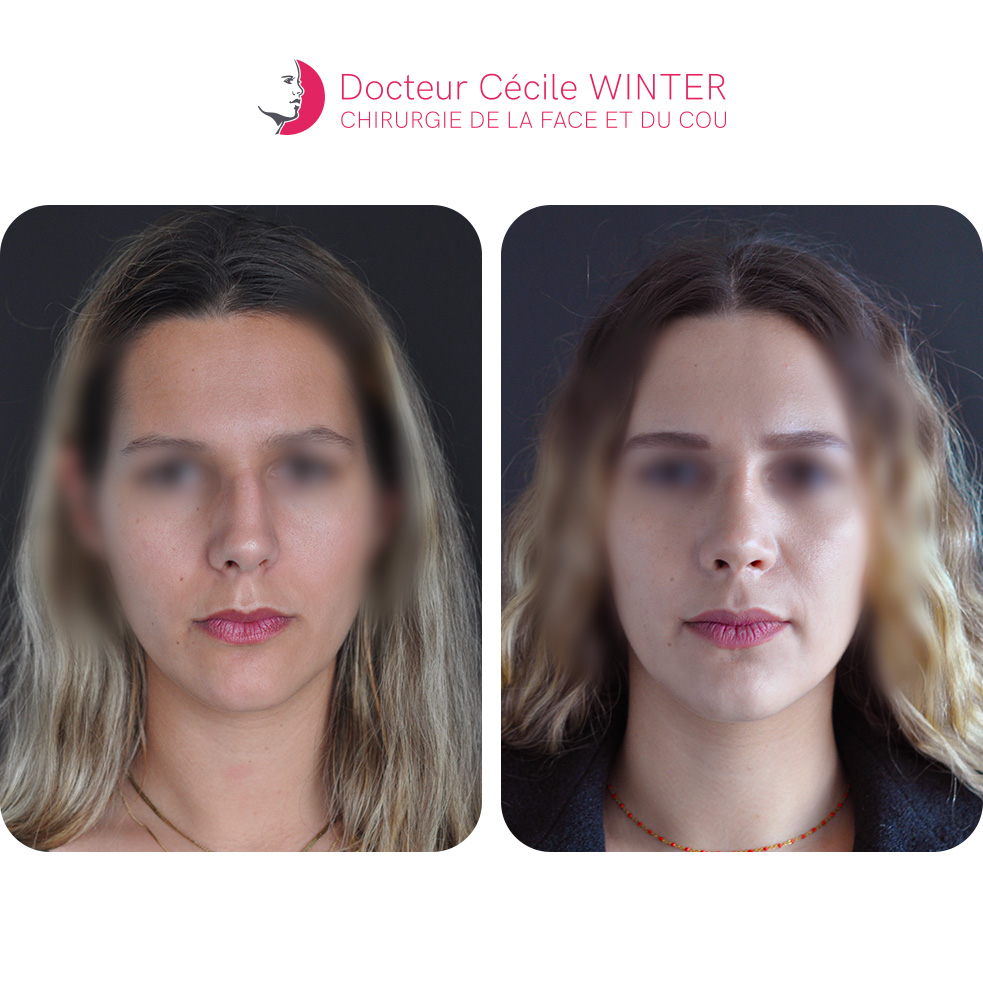
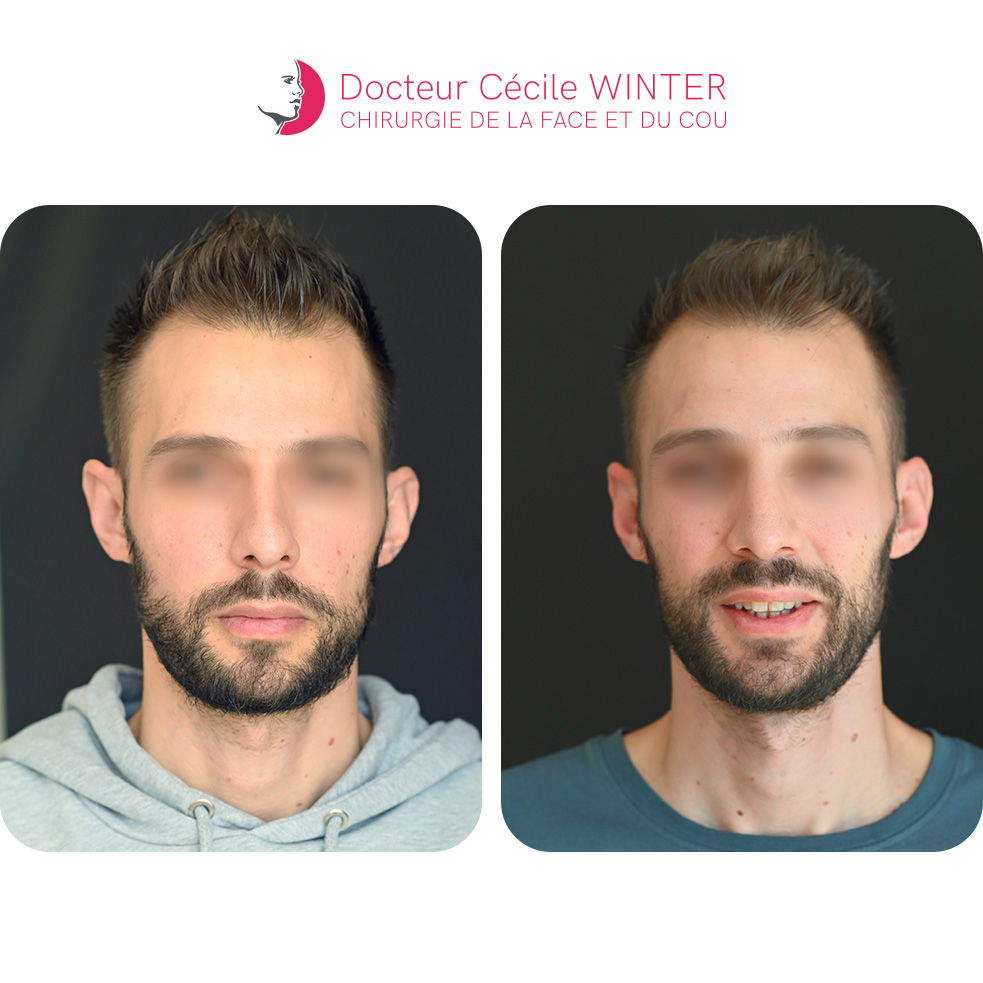
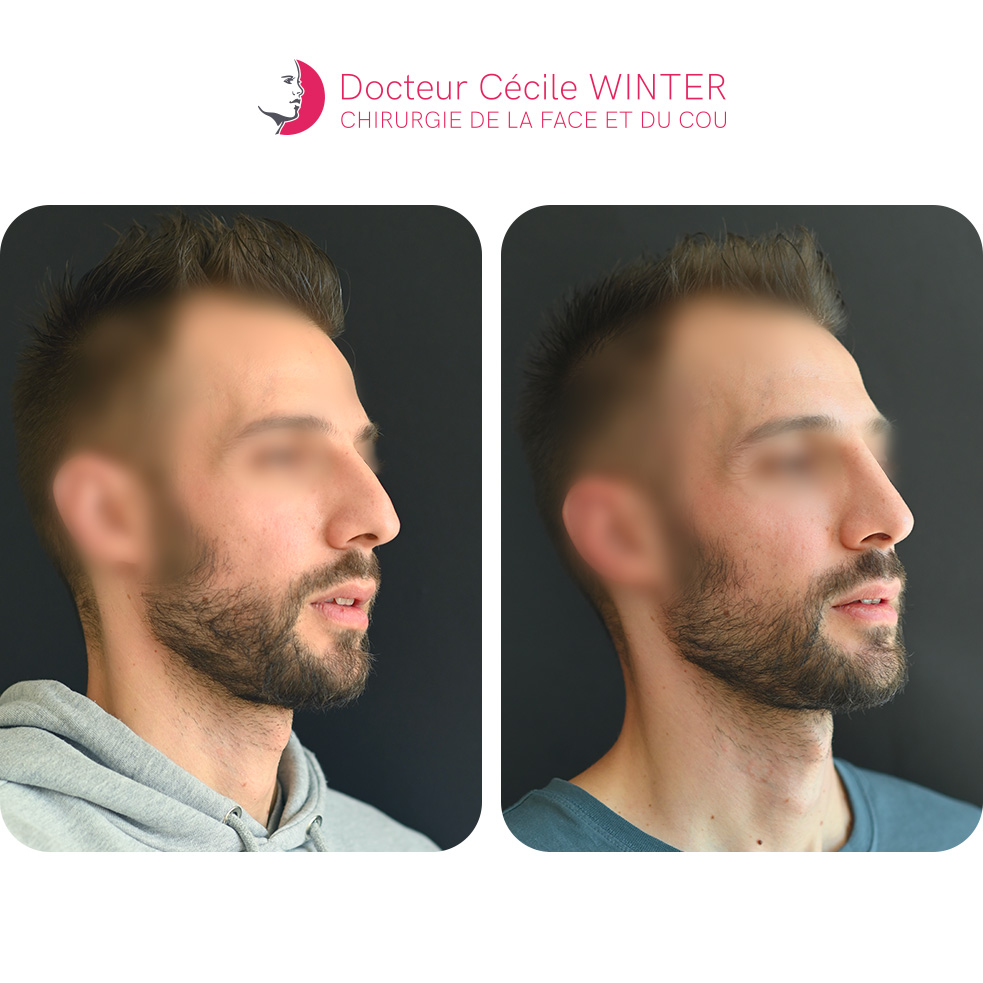
Young patient with an asymmetrical nose, internal valve syndrome, a bump, and a moderately defined tip. The infratip, root, and base are aesthetically pleasing. A conservative anatomical rhinoplasty was performed to address the septal deviation, as well as the excess height and length of the septum. The tip was slightly reworked and adjusted to this new height to maintain the infratip and create a well-defined supratip. Once again, the goal of this rhinoplasty is to ensure proper breathing and achieve a nose that is very harmonious with the face, making the surgical work completely unnoticeable. The result is at 2 years.

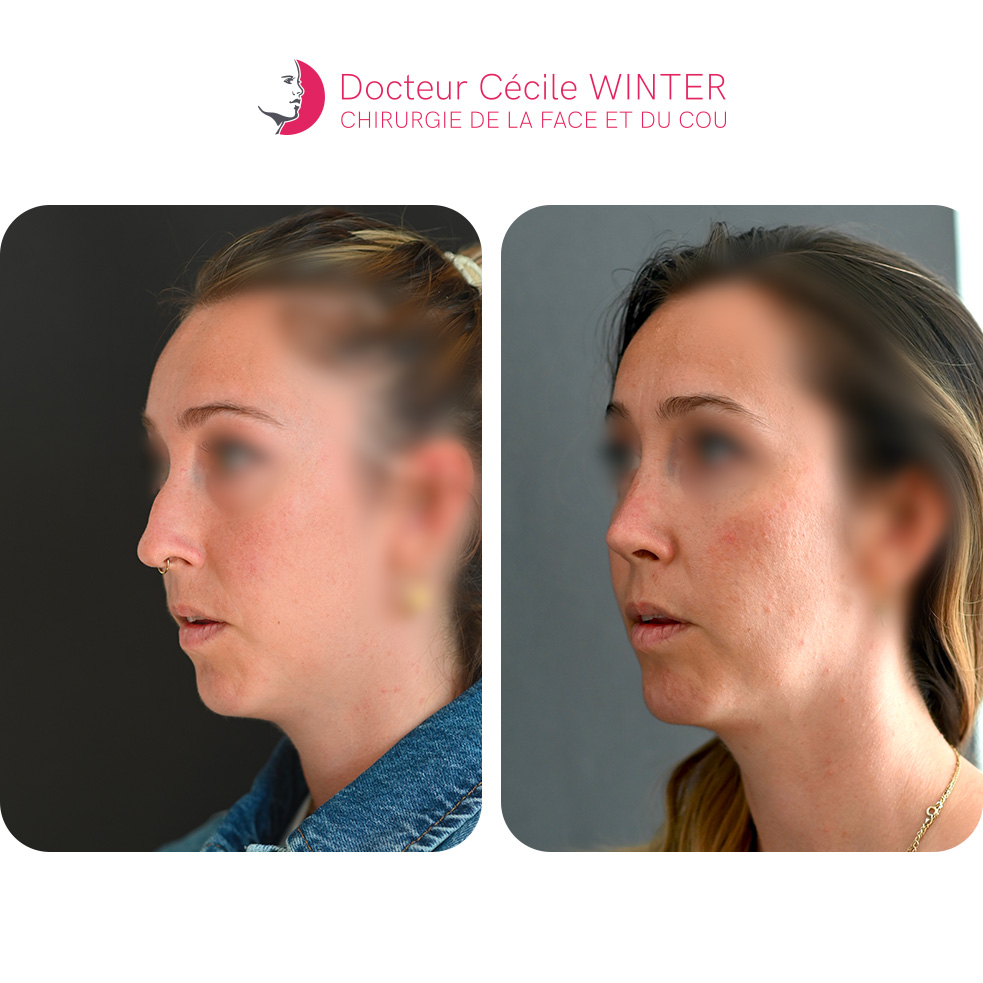
Patient 16

Conservative Anatomical Rhinoplasty

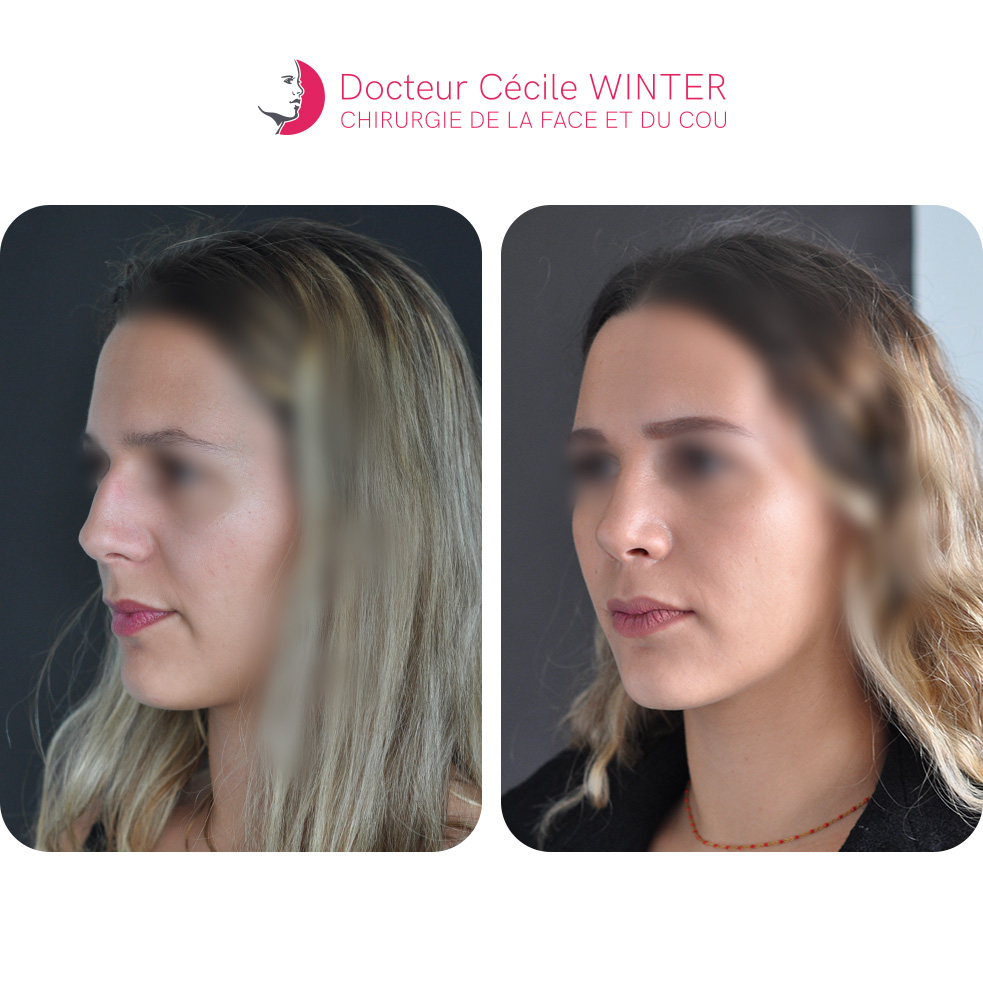
Young patient with a history of nasal trauma presenting with a bump, rhino-septal deviation, and bilateral nasal obstruction. The entire nose (bridge and tip) was deviated due to the trauma, and the angle between the nose and mouth was very open. Here, the conservative anatomical rhinoplasty performed addressed the nasal obstruction and external signs of trauma by straightening the septum, removing the bump, and readapting and realigning the tip. The challenge was not to shorten the nose while restoring the original harmony of her face. Result is over one year post-op.

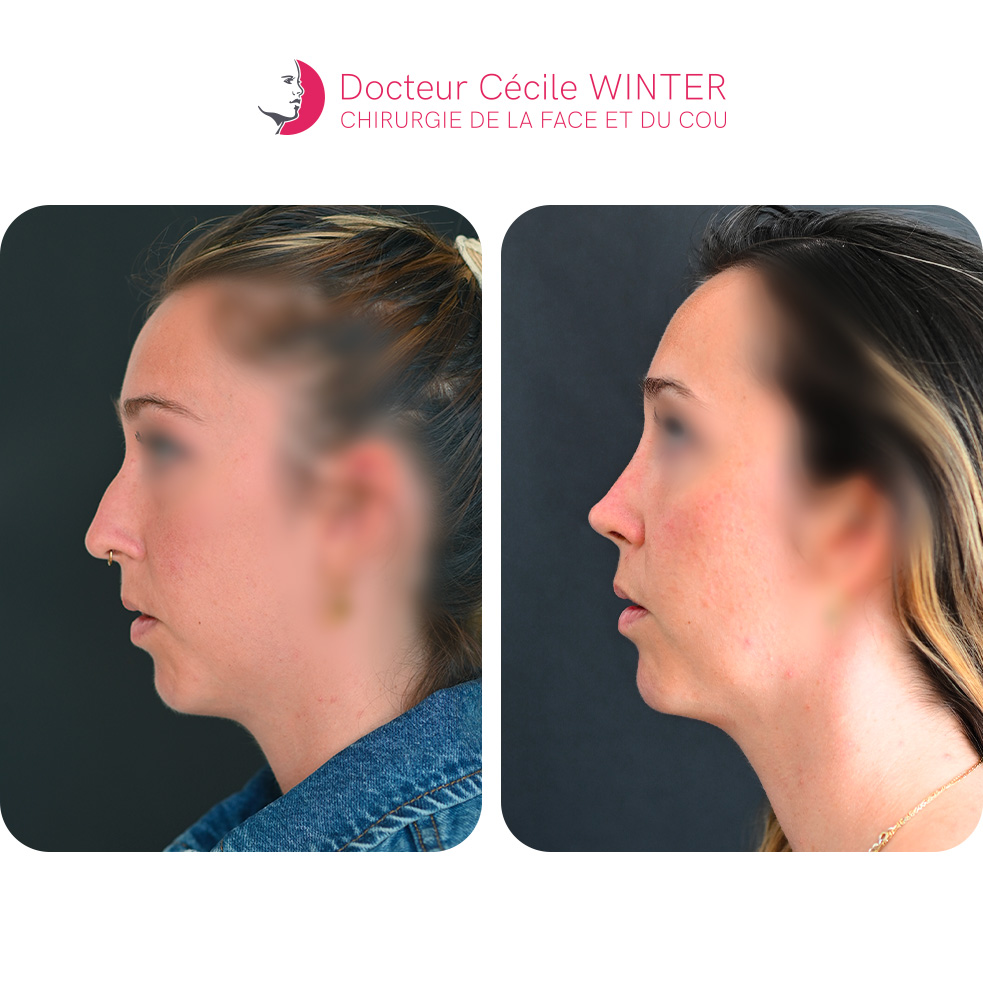
Patient 19

Conservative Anatomical Rhinoplasty

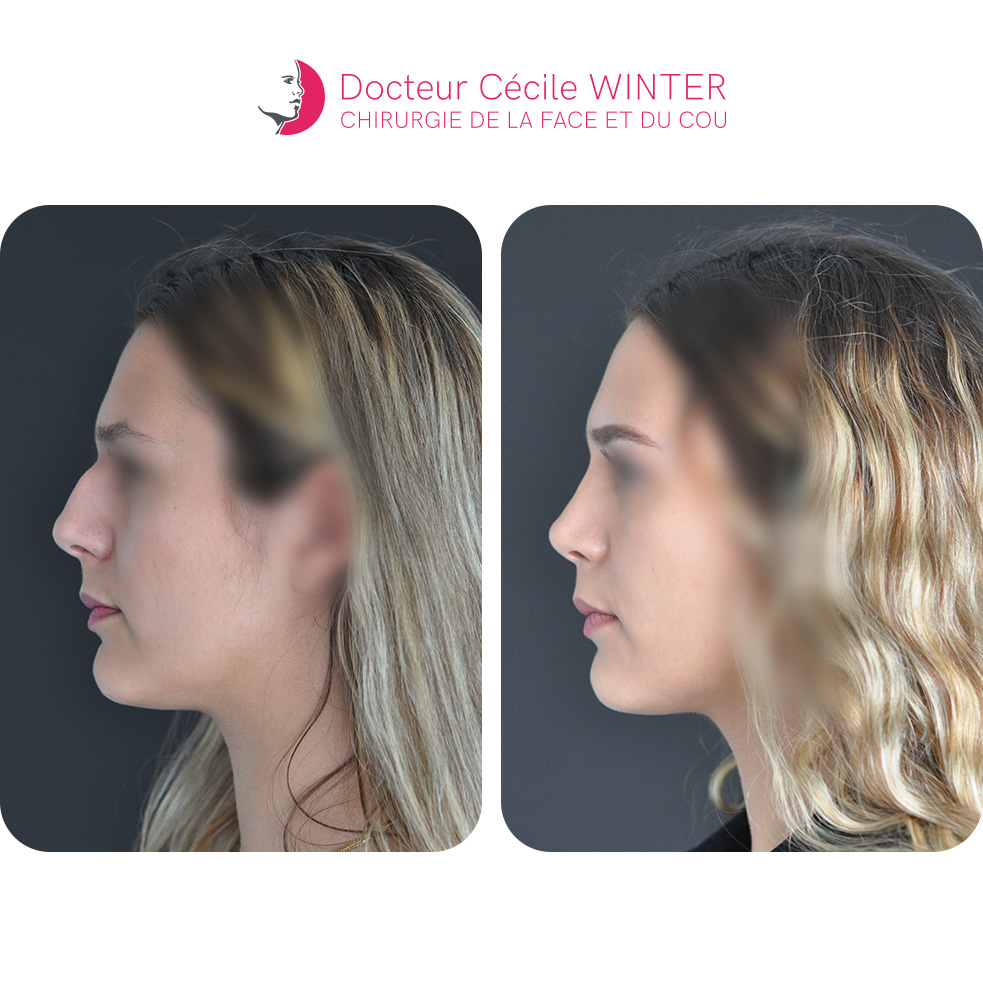
Patient presenting with a hyper-projected dorsum with a bump, a pinched dorsum with internal valve syndrome, and a hanging tip. The nasal root is at the right height, the nose is relatively short, and the projection of the tip as well as the infratip are good. The conservative anatomical rhinoplasty performed here involved removing the bump, repositioning the tip, creating a supratip, and making sure not to shorten the nose. The result is seen here at 4 years post-op.

Patient 20

Patient 9

Patient 11

Correction of Nasal Obstruction and Drooping Tip

This young patient was troubled by nasal obstruction, with a broad and downward-rounded tip (Corbin) on the base of a small comma-shaped nose, with a well-placed root and a nice infratip. The conservative anatomical rhinoplasty aimed to improve breathing, lift and refine the tip to create an elegant supra-tip, while minimizing nose reduction to preserve respiratory function. The results are shown at one and a half years post-op.

Patient 12

Correction of Undefined and Drooping Tip

A young patient presented with an undefined, drooping tip and a slightly convex and long dorsum. The central part of the lobule, the root, and the nose-lip distance were aesthetically pleasing. A conservative anatomical rhinoplasty addressed these two morphological issues while maintaining the root height, the attractiveness of the infratip, and redefining the supratip.

The results are shown at one and a half years post-op.

Patient 6

Patient 5